What Each Coverage Actually Does
Auto insurance policies can feel like a maze of overlapping terms, but collision and comprehensive coverage have clearly defined roles. Understanding those roles is the first step to knowing whether a claim will be honored — and avoiding the frustration of filing under the wrong coverage type.
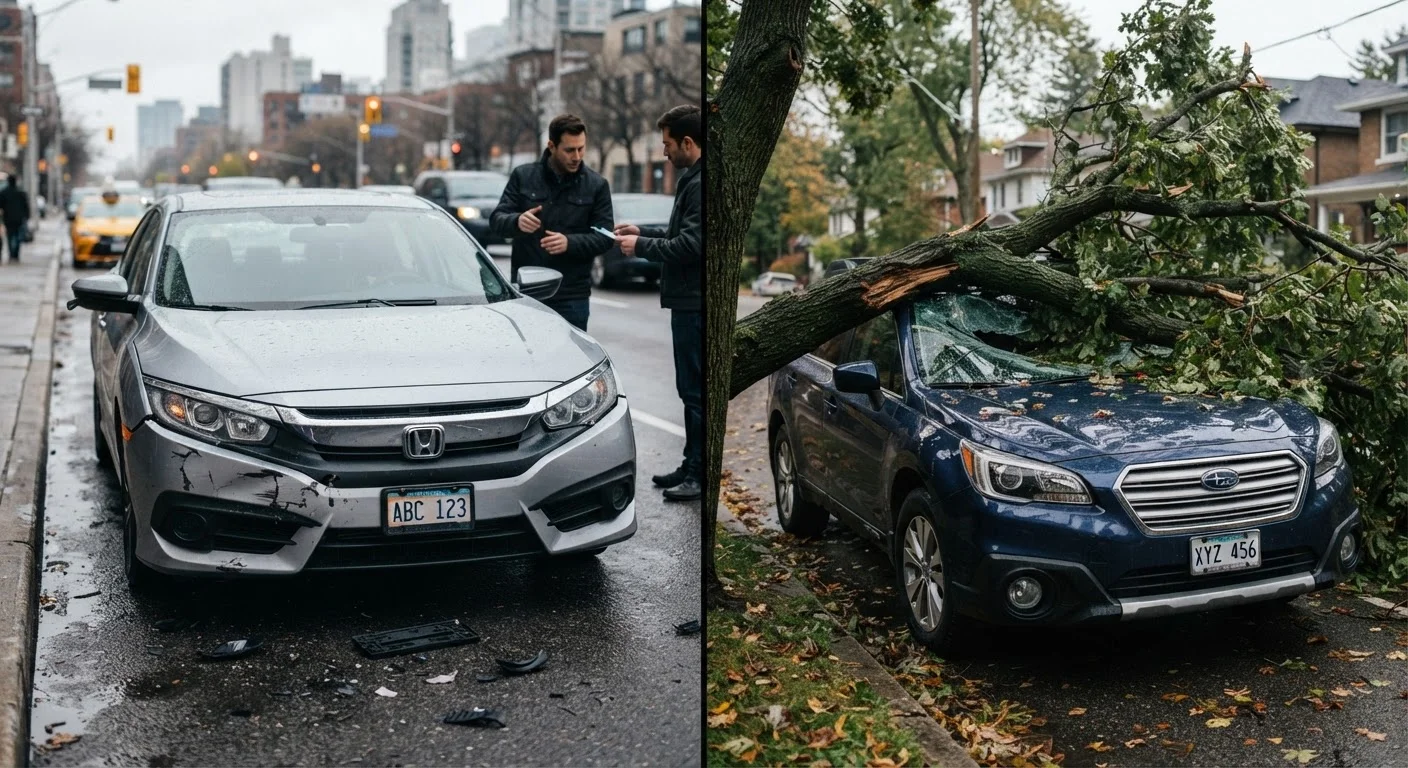
Collision coverage responds when your vehicle is damaged as a direct result of impact. That includes hitting another car, backing into a concrete pillar, or rolling your vehicle. It also covers damage when another driver hits your parked car, if you cannot recover costs from their liability policy. The defining factor: physical contact between your car and something else.
Comprehensive coverage addresses losses that don't involve a collision. Think of it as protection against the unpredictable — a deer runs into your path, a hailstorm batters your hood, your car is stolen from a parking lot, or wildfire smoke and embers damage the exterior. The common thread is that the loss originates from forces or events beyond typical driving scenarios.
Both coverages are optional under state law, but if you're financing or leasing your vehicle, your lender almost certainly requires both. See our full breakdown of minimum versus fuller coverage options to understand what gaps state-mandated minimums leave open.
| Criterion | Collision Coverage | Comprehensive Coverage |
|---|---|---|
| What triggers a claim | Impact with another vehicle or object | Theft, weather, fire, animals, vandalism |
| Single-vehicle accident | Covered | Not covered |
| Hail or flood damage | Not covered | Covered |
| Vehicle theft | Not covered | Covered |
| Hitting a deer | Not covered | Covered |
| Deductible applies | Yes | Yes |
| Required by law | No (lender may require) | No (lender may require) |
| Premium impact of at-fault claim | Typically increases premium | Generally lower impact on premium |
How Deductibles Work for Each
Both collision and comprehensive coverage carry a deductible — the out-of-pocket amount you pay before your insurer covers the rest of a claim. You choose your deductible when you buy or renew the policy, and your choice directly affects your premium.
A higher deductible typically lowers your monthly premium but increases what you owe if you file a claim. A lower deductible does the opposite. Many drivers select different deductible levels for each coverage type. For example, because comprehensive claims often involve events like theft or major weather damage, some drivers carry a lower comprehensive deductible while accepting a higher collision deductible if they consider themselves careful drivers.
One important nuance: comprehensive claims generally do not raise your premium the way at-fault collision claims can, because they involve events outside your control. However, multiple claims in a short window — of any type — can influence how an insurer assesses your risk profile. Policies and insurer practices vary, so verify this with your specific provider.
Setting your deductibles without thinking through your financial situation is one of the coverage decisions drivers often regret. A deductible you can't comfortably afford in an emergency effectively turns your coverage into a policy you can't use.
Gray Areas: When the Lines Blur
A few scenarios genuinely confuse drivers when it comes to which coverage applies.
- Hitting an animal: Striking a deer or other animal is typically covered under comprehensive — not collision — because wildlife impact is classified as an unavoidable, non-collision event. Swerving to avoid the animal and hitting a tree, however, would shift to collision.
- Flooding: Water damage from a flood, storm surge, or flash flood falls under comprehensive. But if you intentionally drove into deep water and damaged the engine, coverage may be disputed.
- Single-vehicle accidents: Rolling your car or sliding off an icy road and hitting an embankment is a collision claim, even though no other vehicle was involved.
- Vandalism: Keyed paint, a smashed window, or slashed tires is covered under comprehensive as intentional damage by a third party — not a collision event.
If your car is totaled — by either a collision or a non-collision event — your insurer will pay the actual cash value of the vehicle at the time of the loss, minus your deductible. If you owe more on your loan than the car is worth, that gap is not automatically covered. Our article on gap insurance and when it applies explains how that protection works and whether it might make sense for your situation.
For situations involving another driver who causes damage but carries insufficient coverage, neither collision nor comprehensive is the relevant tool. That scenario belongs to a different part of your policy — one explained in detail in our guide on uninsured and underinsured motorist coverage.
This article is for general informational purposes only and does not constitute insurance advice. Coverage terms, exclusions, and conditions vary by policy and insurer. Consult a licensed insurance professional and review your policy documents for guidance specific to your situation.