Liability Coverage: Protecting Others From the Damage You Cause
Liability coverage is the backbone of virtually every auto insurance policy in the United States. It pays for bodily injury and property damage that you cause to other people in an accident where you are at fault. It does not pay for repairs to your own vehicle or your own medical bills.
Liability limits are typically expressed as a set of three numbers — for example, 25/50/25. These represent:
- $25,000 per person for bodily injury
- $50,000 total per accident for bodily injury
- $25,000 for property damage per accident
State-mandated minimums often fall well below what a serious accident can cost. If your liability limits are exhausted, you may be personally responsible for the remainder. Drivers who own significant assets generally consider higher limits a worthwhile safeguard — though the right amount is a personal decision best made with a licensed agent.
"Full Coverage" Has No Standard Legal Definition
You'll often hear drivers say they have "full coverage," but this phrase isn't defined in insurance law or policy documents. It commonly refers to a combination of liability, collision, and comprehensive — but it doesn't mean every possible loss is covered. Gaps can still exist for things like uninsured motorists, medical payments, or rental reimbursement. Always review your actual policy rather than relying on shorthand descriptions.
To understand how liability limits appear on your policy documents, see our guide on reading your auto insurance declarations page.
Collision Coverage: Repairing Your Car After an Accident
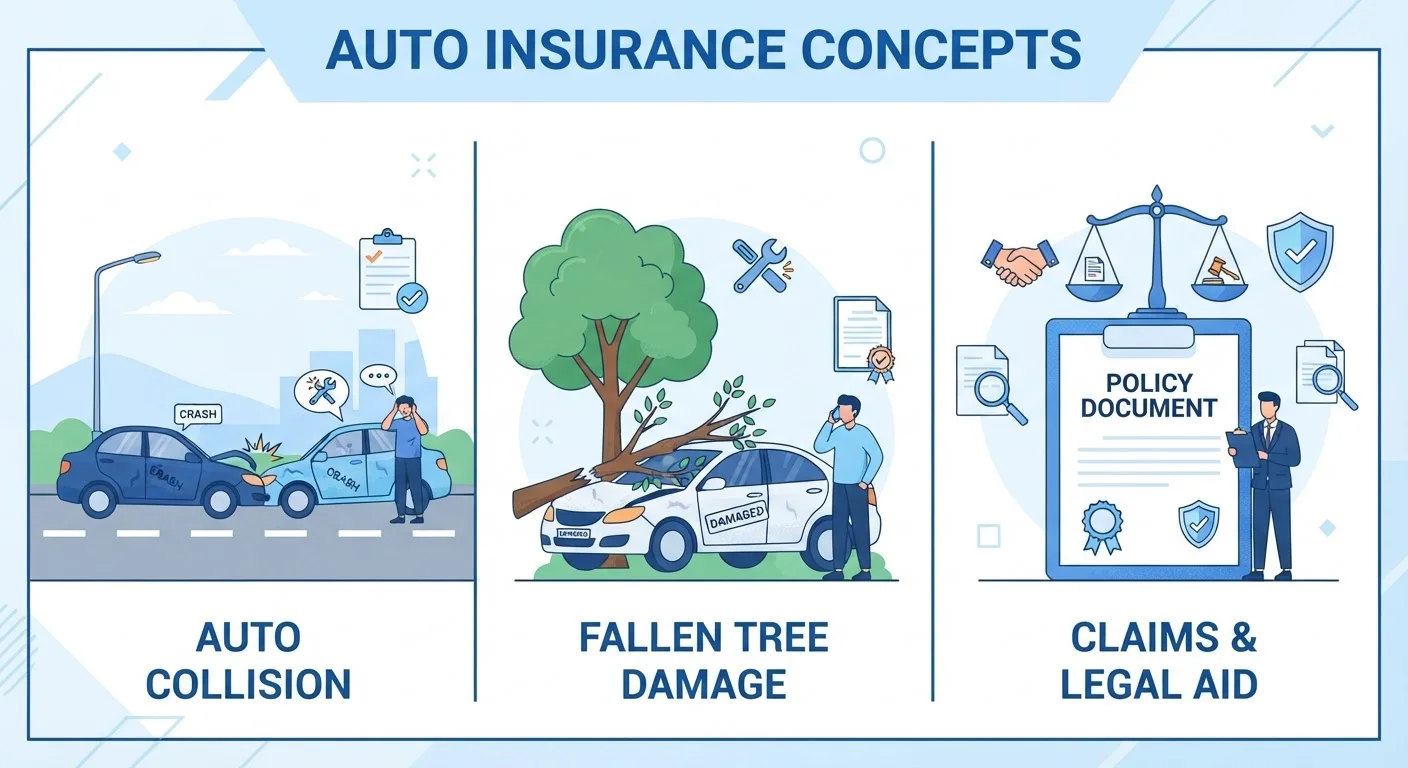
Collision coverage pays to repair or replace your vehicle when it's damaged in a collision — whether with another car, a guardrail, a pole, or any other object. Crucially, collision applies regardless of who was at fault. That fault-neutral protection is one of its most important distinctions from liability.
When you file a collision claim, you pay your chosen deductible first, and the insurer covers the rest up to your vehicle's actual cash value (ACV) — the market value of the car at the time of the loss, accounting for depreciation.
Collision is not required by state law, but lenders and leasing companies almost always require it while you owe money on a vehicle. Once a loan is paid off, the decision to keep or drop collision is yours. Consider factors like the car's current value, your financial cushion, and how much the premium costs relative to what you'd receive in a claim.
~13%
U.S. drivers estimated to be uninsured
According to the Insurance Research Council, roughly one in eight drivers on American roads carries no insurance, underscoring why liability limits and uninsured motorist coverage matter.
49 states
States with mandatory liability insurance laws
New Hampshire is the only state that does not mandate auto liability insurance outright, though it requires drivers to demonstrate financial responsibility in other ways.
$4,700+
Average collision claim cost (industry estimates)
Industry data from the Insurance Information Institute indicates average collision claims regularly exceed several thousand dollars, illustrating why the coverage carries meaningful financial weight.
If your loan balance exceeds your car's ACV, gap insurance may be worth exploring as a complement to collision coverage.
Comprehensive Coverage: When the Damage Isn't From a Crash
Comprehensive coverage handles losses that have nothing to do with a collision. Think of it as protection against the world beyond the road itself. Covered events commonly include:
- Theft or vandalism
- Weather events — hail, flooding, wind damage
- Fire
- Falling objects, such as trees or debris
- Animal strikes (hitting a deer, for instance)
Like collision, comprehensive pays up to your vehicle's actual cash value, minus your deductible. Also like collision, it is optional under state law but typically required by lenders.
One practical way to think about it: if something happens to your car while it's parked and no collision was involved, comprehensive is usually the coverage that responds. For a deeper look at how to distinguish between collision and comprehensive in real incidents, see our guide to collision vs. comprehensive after an incident.
How These Three Coverages Work Together
Most drivers benefit from understanding these coverages not as isolated products but as a system. Liability protects your finances from claims others make against you. Collision protects your vehicle when it's involved in a crash. Comprehensive protects your vehicle from everything else. Together, they address the most common and costly categories of auto-related loss.
Common coverage combinations include:
- Liability only: Meets legal minimums; leaves your own vehicle entirely unprotected.
- Liability + collision: Adds protection for accident damage to your car, but not non-collision losses.
- Liability + collision + comprehensive: Often called "full coverage" informally, though that term has no standardized legal meaning.
Several factors influence what coverage mix makes sense: the age and value of your vehicle, whether you're financing it, your savings, and your risk tolerance. Premium pricing is shaped by variables ranging from your driving record to your location — our article on the factors that shape your car insurance premium explains these in detail.
If you're navigating this coverage decision as part of a vehicle purchase, the car-buying process section of our site covers insurance considerations alongside the broader purchasing journey.
This article is for general informational purposes only and does not constitute personalized insurance, legal, or financial advice. Coverage availability, terms, and requirements vary by state and insurer. Consult a licensed insurance professional for guidance specific to your situation.