Why the Finance Office Deserves Your Full Attention
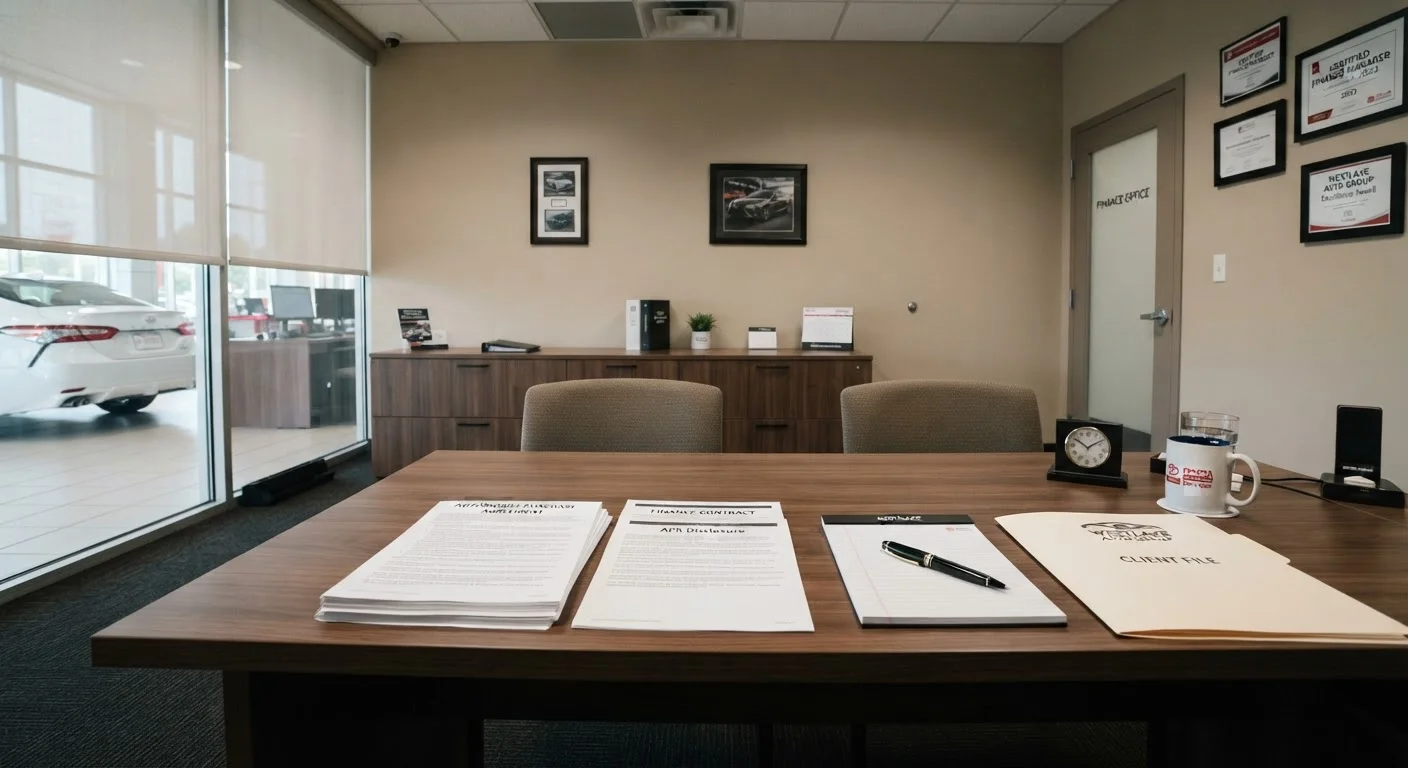
Most car buyers spend hours researching vehicles and negotiating a price on the sales floor — then rush through the finance office. That's a costly mistake. The finance and insurance (F&I) office is where a dealership's back-end profit is made, primarily through add-on products, adjusted loan terms, and fees buried in dense contract language.
This checklist gives you a structured set of questions to ask at each stage of the signing process. Whether you're a first-time buyer or a seasoned negotiator, these questions help you slow down, stay in control, and leave without regrets. For a broader look at what new buyers commonly miss, see things first-time car buyers tend to overlook.
Before You Enter the Finance Office
Loan and Financing Terms
Add-On Products and Protection Packages
Reviewing the Contract Itself
Trade-In Verification (if applicable)
Tools and Documents to Bring With You
Preparation before you enter the dealership reduces the leverage the finance office holds over you. Having your own financing pre-arranged, for instance, gives you a benchmark rate to compare against the dealer's offer. Our guide on financing through a dealer vs. your own bank walks through how each path works and what to watch for.
Pre-approved loan offer
Provides a benchmark interest rate to compare against the dealer's financing terms.
Vehicle history report
Documents the used vehicle's ownership, accident, and service history before you commit.
Notepad or phone for notes
Lets you record verbal promises, fees discussed, and any discrepancies you spot in real time.
Insurance ID card or proof of coverage
Required by most dealers before you can drive the vehicle off the lot.
Calculator
Helps you quickly verify that the monthly payment, APR, and loan term the dealer quotes are mathematically consistent.
If you're purchasing a used vehicle, additional verification steps apply before any paperwork is signed. Review what to check before driving a used car off the lot for documentation and mechanical basics worth confirming first.
Monthly Payment Framing Can Be Misleading
Finance managers often focus the conversation on monthly payment amounts rather than total loan cost. A lower monthly payment can mask a longer loan term or higher interest rate that costs you significantly more overall. Always ask for the total amount repaid over the full loan term before agreeing to any financing arrangement.
After You Sign: What to Verify Immediately
Once you've signed and taken delivery, your contract becomes binding — so the time to catch errors is before you drive away. Confirm the vehicle identification number (VIN) on your contract matches the car you're taking home. Verify that the interest rate, loan term, and monthly payment all match what was verbally agreed. Ask for copies of every document you signed, including the buyer's order and the retail installment agreement.
If you financed through the dealer, you may receive correspondence from the actual lender within a few days — keep an eye out and review any discrepancies immediately. Understanding your ongoing insurance obligations is also essential once you own the vehicle; the auto insurance hub covers coverage types and key terms to understand. For long-term ownership costs, car maintenance is a practical resource for keeping your new vehicle running efficiently.