The Depreciation Question: Where the Money Actually Goes
Depreciation — the loss in a vehicle's market value over time — is often the single largest ownership cost, yet it rarely appears as a line item on a window sticker. New vehicles typically experience their sharpest value decline in the first year and again by the end of year three. The exact rate varies by brand, model, and market conditions, but the pattern is consistent enough that it shapes every serious conversation about buying new versus used.
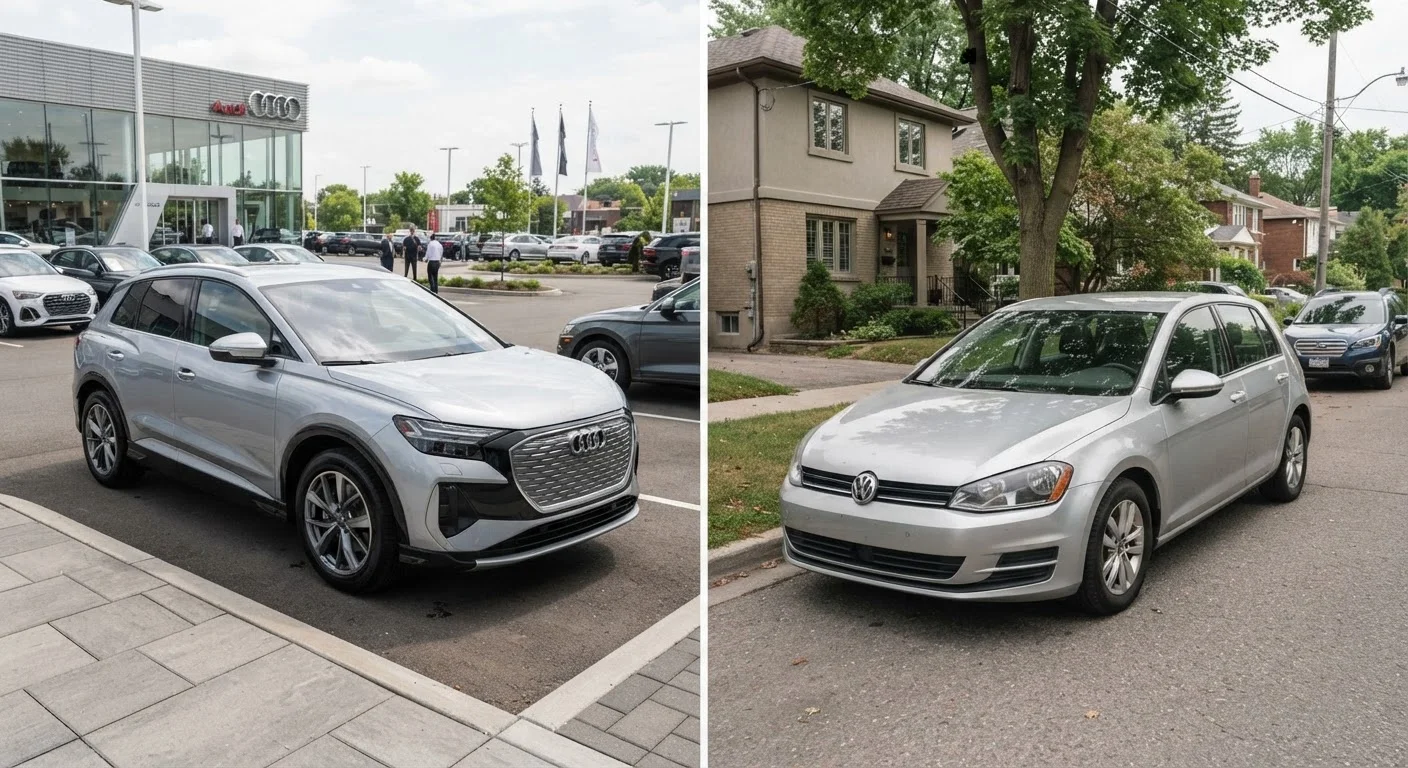
When you buy a used car that is two or three years old, you are, in effect, letting the first owner absorb that initial decline. The vehicle's price reflects what the market currently believes it is worth, not what someone paid for it originally. That shift in starting point can represent a meaningful difference in how much total value you lose across your period of ownership.
New-car buyers are not simply paying for depreciation, of course — they receive a vehicle with zero prior wear, a full factory warranty, and the manufacturer's latest specifications. Whether those benefits justify the premium depends on how long you plan to keep the car and how much financial predictability matters to you.
| Criterion | New Car | Used Car |
|---|---|---|
| Purchase price | Higher sticker price | Lower entry cost |
| Depreciation impact | Steepest in first 1–3 years | Prior owner absorbed early drop |
| Warranty coverage | Full factory warranty | Varies; CPO extends coverage |
| Financing rates | Often lower; promo rates available | Generally higher APR |
| Insurance cost | Higher (higher vehicle value) | Typically lower |
| Registration fees | Higher (value-based in most states) | Lower |
| Technology & safety features | Latest ADAS standard | Depends on model year |
| Vehicle history | None (zero prior use) | Requires verification |
Financing, Insurance, and the Costs You Might Not Anticipate
Purchase price is only one part of the total cost picture. Financing terms for new and used vehicles often differ in ways that can offset some of the sticker-price advantage of buying used.
Automakers and their lending arms occasionally offer promotional interest rates on new vehicles — rates that are not available on used purchases. Used-car loans through banks, credit unions, or dealership finance departments generally carry higher annual percentage rates (APRs), reflecting the additional risk lenders associate with older collateral. A lower loan balance at a higher rate can still produce a manageable payment, but running the numbers on total interest paid over the loan's life is worthwhile.
Auto insurance costs also tend to differ. Comprehensive and collision coverage — which pays to repair or replace your vehicle after an accident or covered event — is calculated partly on the vehicle's value. A more expensive new car generally means a higher premium for those coverages. Registration and title fees in most states are tied to the vehicle's value or purchase price as well, so a used vehicle frequently carries lower first-year fees.
Maintenance costs add another dimension. A new vehicle under warranty shifts most repair costs to the manufacturer for a set period. A used vehicle outside its original warranty period puts those costs on the owner, which is why a pre-purchase inspection by an independent mechanic is a standard recommendation — not an optional extra — when buying used. Our guide on what to check before driving a used car off the lot covers exactly what to verify before you sign.
Certified Pre-Owned: The Middle Ground Worth Knowing
Manufacturer-backed certified pre-owned (CPO) programs occupy the space between standard used and brand-new. To qualify, vehicles must typically meet age and mileage limits and pass a multi-point inspection, after which the manufacturer extends warranty coverage — sometimes approaching what a new buyer would receive.
CPO pricing sits above equivalent non-certified used vehicles, which is the trade-off. You pay something for the inspection, the warranty extension, and the brand's backing. Whether that premium is worth it depends on how much confidence you want in the vehicle's condition and how much remaining warranty coverage matters to your budget planning.
What 'Certified Pre-Owned' Actually Means
CPO programs are manufacturer-specific — a CPO vehicle from one brand may have different inspection criteria and warranty terms than a CPO from another. Always ask for the written inspection report and the exact warranty terms in writing before signing. Third-party 'certified' labels from individual dealerships are not the same as manufacturer-backed CPO programs and carry different levels of assurance.
If you are considering trading in your current vehicle as part of either transaction, understanding how appraisals work can meaningfully affect your negotiating position. See our coverage on why trade-in offers vary between dealers for a clearer picture of what drives those differences.