What a Vehicle History Report Actually Contains
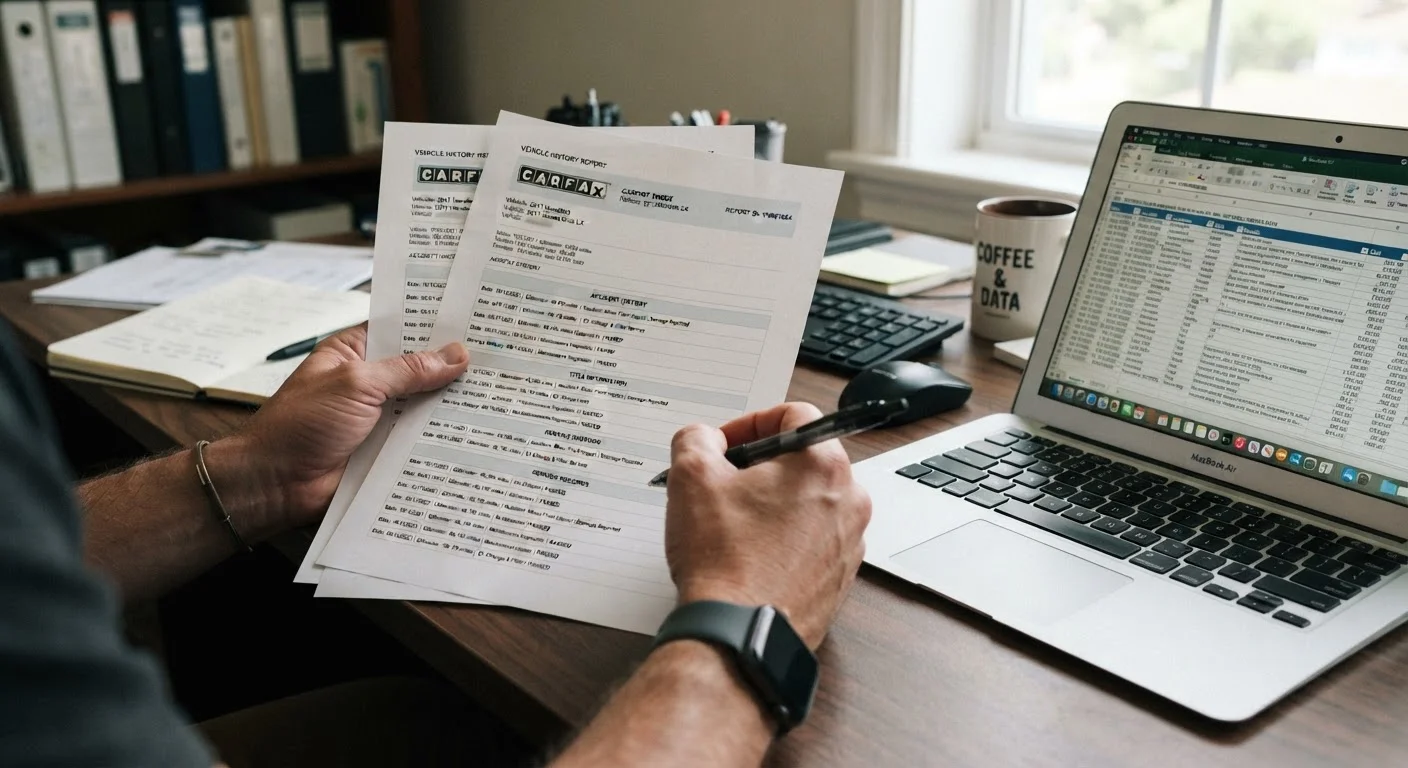
A vehicle history report aggregates data from government agencies, insurance companies, auto auctions, and repair facilities to build a documented timeline of a specific vehicle. Each report is tied to the car's VIN — a 17-character code that acts as the vehicle's permanent fingerprint.
Reports typically cover several distinct categories: title and ownership history, accident and damage disclosures, odometer readings over time, service and maintenance records (where reported), recall status, and lemon law or buyback designations. Not every event in a car's life gets recorded — a private cash repair that never involved insurance, for example, leaves no trace — so a clean report is a starting point for confidence, not a final verdict.
Before diving into the steps, it helps to have your tools ready.
What you will need
Vehicle Identification Number (VIN)
Required to pull the correct history report — every lookup is tied to a specific VIN.
Vehicle History Report
The primary document you will be reading, containing title, odometer, accident, and ownership data.
Notepad or Digital Notes App
Used to flag sections that need follow-up questions or mechanic verification.
Independent Pre-Purchase Inspection (from a licensed mechanic)
Provides a physical assessment to complement the data in the history report.
How to Work Through Each Section
Once you pull up the report, resist the urge to scan it quickly for a single red flag. Work through it section by section using the steps below. This methodical approach ensures nothing slips past you before a significant financial commitment.
Verify the VIN Matches the Physical Vehicle
Before trusting any data in the report, confirm the VIN on the report matches the VIN on the actual car. Check the dashboard plate (visible through the windshield on the driver's side), the driver-side door jamb sticker, and the title document. A mismatch is a serious red flag — it may indicate a cloned or stolen vehicle.
Check the Title Status First
Title status is the most consequential section in the report. Look for any of these designations: clean (no known issues), salvage (declared a total loss), rebuilt/reconstructed (repaired after total loss), flood, fire, hail, or lemon law buyback. A clean title is a baseline requirement — any other designation demands a clear explanation from the seller and a thorough independent inspection before you consider moving forward.
Review Odometer Readings Chronologically
Reports list odometer readings recorded at inspections, registrations, auctions, and service visits. Arrange these mentally in chronological order. The numbers should increase steadily over time. A reading that is lower than a previous reading — called an odometer rollback — is a major fraud indicator. Even if rollback isn't obvious, an unusually low mileage for the vehicle's age is worth probing.
Examine Accident and Damage Records
This section lists incidents that were reported to insurance companies or noted at auctions. Pay attention to: the severity indicated (minor, moderate, or severe), which areas of the vehicle were affected, and whether airbags deployed. Structural or frame damage is especially significant — even well-repaired frame damage can affect handling, safety ratings, and long-term durability. Note every incident and bring the list to a mechanic for a physical evaluation.
Count Owners and Review Ownership Patterns
The report will show how many owners the vehicle has had and often where it was registered. Multiple owners in a short timeframe — say, three owners in two years — may indicate recurring problems. Fleet or rental history is also noted here; these vehicles typically have higher mileage relative to age and may have been driven more aggressively, though they often come with regular documented service.
Check Open Recalls
Many history reports include a recall section tied to the VIN. An open recall means a known safety defect has been identified by the manufacturer but has not yet been repaired on this vehicle. Open recalls can typically be completed at no cost at a franchised dealership. Confirm any open recalls with the manufacturer directly using the National Highway Traffic Safety Administration's free VIN lookup tool at nhtsa.gov.
After reviewing your report, you'll want to take the next step in the buying process. See our step-by-step pre-purchase checklist for the documentation and mechanical basics worth verifying before you take ownership. And if a shop estimate surfaces during that process, our guide to reading a mechanic's estimate can help you interpret every line item.
Limitations and What to Do Next
History reports have real boundaries. Data is only as good as what was submitted — many minor accidents, flood events repaired privately, and mechanical failures never appear. A report showing zero accidents doesn't mean the car was never in a collision; it may mean the damage was handled outside of insurance or auction channels.
Certain title brands, such as salvage, rebuilt, flood, or lemon law buyback, are serious flags that warrant extra caution — or walking away entirely. A vehicle with a salvage title has been declared a total loss by an insurer. A rebuilt title means it was subsequently repaired and passed a state inspection, but coverage and resale value will be affected. For context on how title status intersects with your insurance options, the Auto Insurance hub covers how these designations influence your coverage decisions.
The most important thing to do after reviewing a history report is schedule an independent pre-purchase inspection with a trusted, licensed mechanic — someone with no financial stake in the sale. A history report tells you what was recorded; a mechanic can tell you what's happening right now under the hood.
This article is for general informational and educational purposes only. Vehicle history reports vary by provider and data source. Always verify findings with a qualified mechanic and consult relevant professionals before making a purchase decision.