Why the Sticker Price Is Just the Beginning
Walk into any dealership and the price on the window — the sticker — will be one of the first numbers you see. That figure, known as the MSRP (Manufacturer's Suggested Retail Price), covers only the base vehicle and any factory-installed options. It tells you almost nothing about what you will actually pay when you hand over your check or sign your loan documents.
Between the MSRP and your final payment sits a collection of taxes, government fees, and dealer charges that can add anywhere from a few hundred to several thousand dollars to the total. The out-the-door price, or OTD, is the number that captures all of it — the real cost of driving that vehicle home. Understanding what goes into it puts you in a far stronger position at the negotiating table, and protects you from sticker shock in the finance office.
As a rule of thumb, common car-buying assumptions can lead shoppers to focus exclusively on the sale price while ignoring the fees that follow — sometimes a costly mistake.
The Core Components of an Out-the-Door Price
A typical out-the-door price is built from four categories of charges:
- Negotiated sale price: The agreed-upon price of the vehicle itself, which may be above or below MSRP depending on market conditions and your negotiation.
- Sales tax: Calculated as a percentage of the sale price, this rate varies by state and sometimes by county or municipality. It is non-negotiable and paid directly to the government.
- Title and registration fees: Government charges to transfer the vehicle title into your name and register it in your state. These amounts are fixed by law and differ from state to state.
- Dealer fees: This is where variability — and scrutiny — matters most. Common dealer fees include a documentation ("doc") fee for processing paperwork, a destination charge (the cost of shipping the vehicle from the factory to the dealer), and sometimes a dealer preparation or advertising fee.
The doc fee alone can range from under $100 in states where it is regulated to more than $900 in states where dealers set it freely. It is worth asking what your state caps — or doesn't cap — on this charge.
$300–$900+
Typical dealer documentation fee range
Doc fee amounts vary widely by state; some states cap them by law while others impose no limit, allowing dealers to set their own amounts.
8–12%
Approximate taxes and fees as share of vehicle price
Industry observers generally estimate that taxes and mandatory fees add between 8 and 12 percent to a vehicle's sale price, though the exact figure depends on the buyer's state and local tax rates.
$1,000–$4,500+
Potential gap between MSRP and OTD price
Depending on state tax rates, local fees, and dealer charges, the out-the-door price on a typical new vehicle can exceed the MSRP by a substantial margin before any optional add-ons.
Add-Ons: Where OTD Prices Can Quietly Balloon
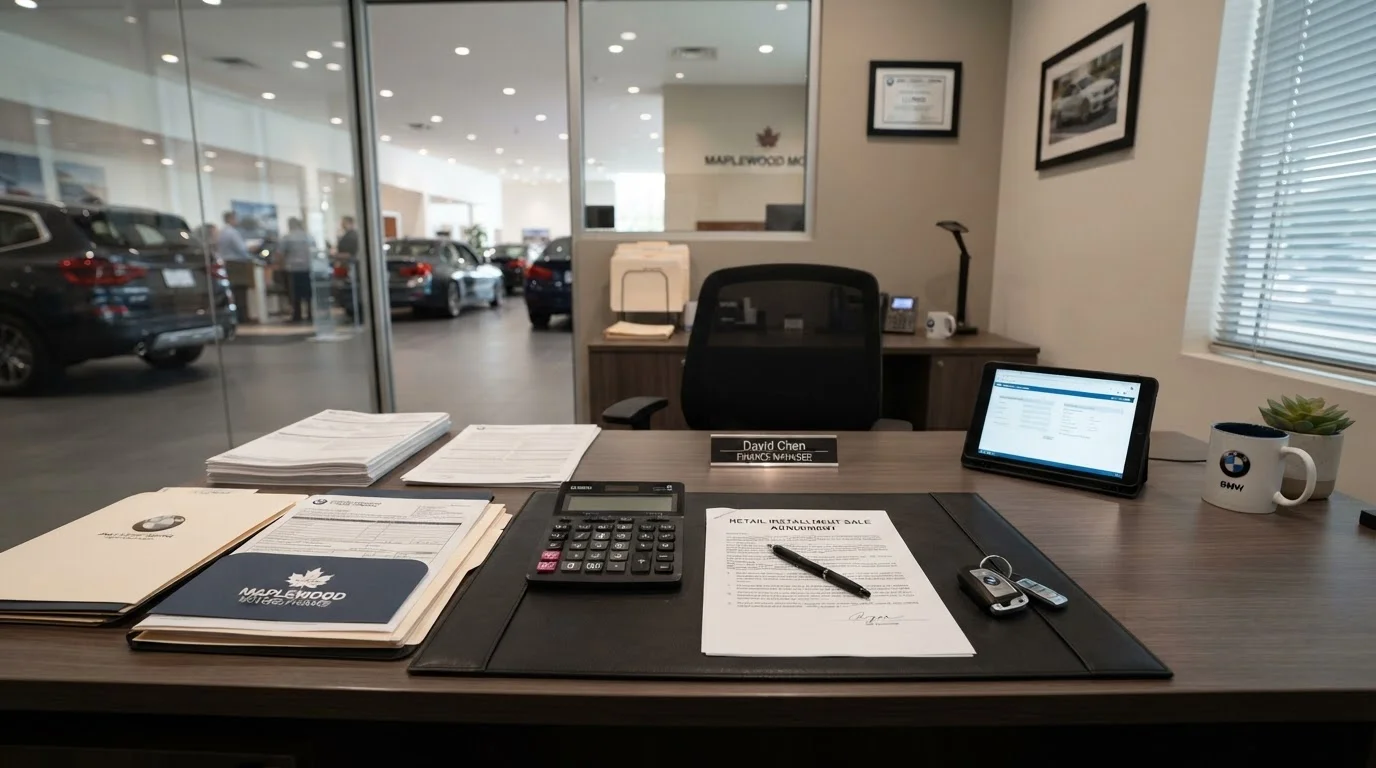
Beyond the core charges, many dealerships present optional products in the finance office that can inflate the final total significantly. These commonly include extended warranties, gap insurance, paint or fabric protection packages, tire-and-wheel coverage, and prepaid maintenance plans.
Because these items are presented after you have already emotionally committed to the vehicle, and because they are often rolled into monthly payments rather than quoted as lump sums, their true cost can be easy to underestimate. A $30-per-month add-on across a 72-month loan adds up to $2,160 — and that figure accrues interest if it is financed.
None of these products are automatically part of the out-the-door price unless you agree to include them. Request an itemized breakdown of every charge before signing, and do not hesitate to ask which items are truly optional. The questions to ask before signing at a dealership can help you avoid committing to products you did not intend to purchase.
How to Use OTD Price When Comparing Dealers
The most practical use of the out-the-door price concept is in cross-dealer comparison. Two dealers might advertise the same vehicle at identical sale prices, yet their final OTD figures could differ by hundreds of dollars due to varying doc fees or bundled accessories.
When contacting dealerships — by email is often the most efficient method — ask specifically: "Can you provide the full out-the-door price in writing, including all fees, taxes, and any dealer-installed products?" This forces an itemized response and gives you something concrete to compare.
Understanding total cost versus unit price is a broader habit that applies directly here: the vehicle's sale price is analogous to the unit price, while the out-the-door figure is the true total cost of the transaction.
Once you have OTD quotes in hand, you are negotiating on the only number that genuinely matters — what you will actually pay.
This article is for general informational purposes only and does not constitute financial or legal advice. Fees, taxes, and regulations vary by state and dealership. Consult a licensed professional for guidance specific to your situation.