Why Vehicle Fluids Matter
Your car relies on a network of fluids to lubricate moving parts, transfer heat, transmit force, and protect critical systems. When any one of them runs low, degrades, or leaks, the consequences range from accelerated wear to outright mechanical failure. The reassuring news: checking most fluids takes less than five minutes and costs nothing. If you're just getting started with under-hood basics, this plain-English introduction for new drivers is a solid place to begin.
Below is a reference guide to the six primary vehicle fluids — what each one does, what to look for, and roughly how often it needs attention.
Hydraulic fluid
A liquid used to transmit force through a closed system of lines and cylinders. Brake fluid and power steering fluid are both hydraulic fluids in a vehicle context.
Hygroscopic
A substance that absorbs moisture from the surrounding air. Brake fluid is hygroscopic, which is why it degrades over time even in a sealed system.
Dipstick
A long, slender probe inserted into the engine oil reservoir that lets you read the oil level and inspect its condition without any tools.
Flush
A maintenance procedure in which old fluid is completely drained from a system and replaced with fresh fluid, removing accumulated contaminants.
Firewall
The metal barrier separating the engine compartment from the passenger cabin. Several fluid reservoirs, including the brake fluid reservoir, are typically mounted on or near it.
The Six Essential Fluids and Their Jobs
Engine Oil
Engine oil lubricates the hundreds of metal components moving inside your engine, reducing friction and carrying away heat and contaminants. Without it, metal grinds against metal within seconds. Check the level monthly using the dipstick — the oil should fall between the two marks, appear amber to dark brown, and not smell burnt. Black, gritty oil or a milky appearance signals a problem. Change intervals vary by vehicle and oil type; consult your owner's manual rather than defaulting to any single rule.
| Engine oil check frequency | Monthly, or before long trips |
| Coolant check condition | Engine must be cold before opening reservoir |
| Brake fluid appearance (healthy) | Clear to pale yellow |
| Transmission fluid color (healthy) | Red and translucent |
| Washer fluid substitute to avoid | Plain water — freezes and underperforms |
| Best source for change intervals | Your vehicle's owner's manual |
Coolant (Antifreeze)
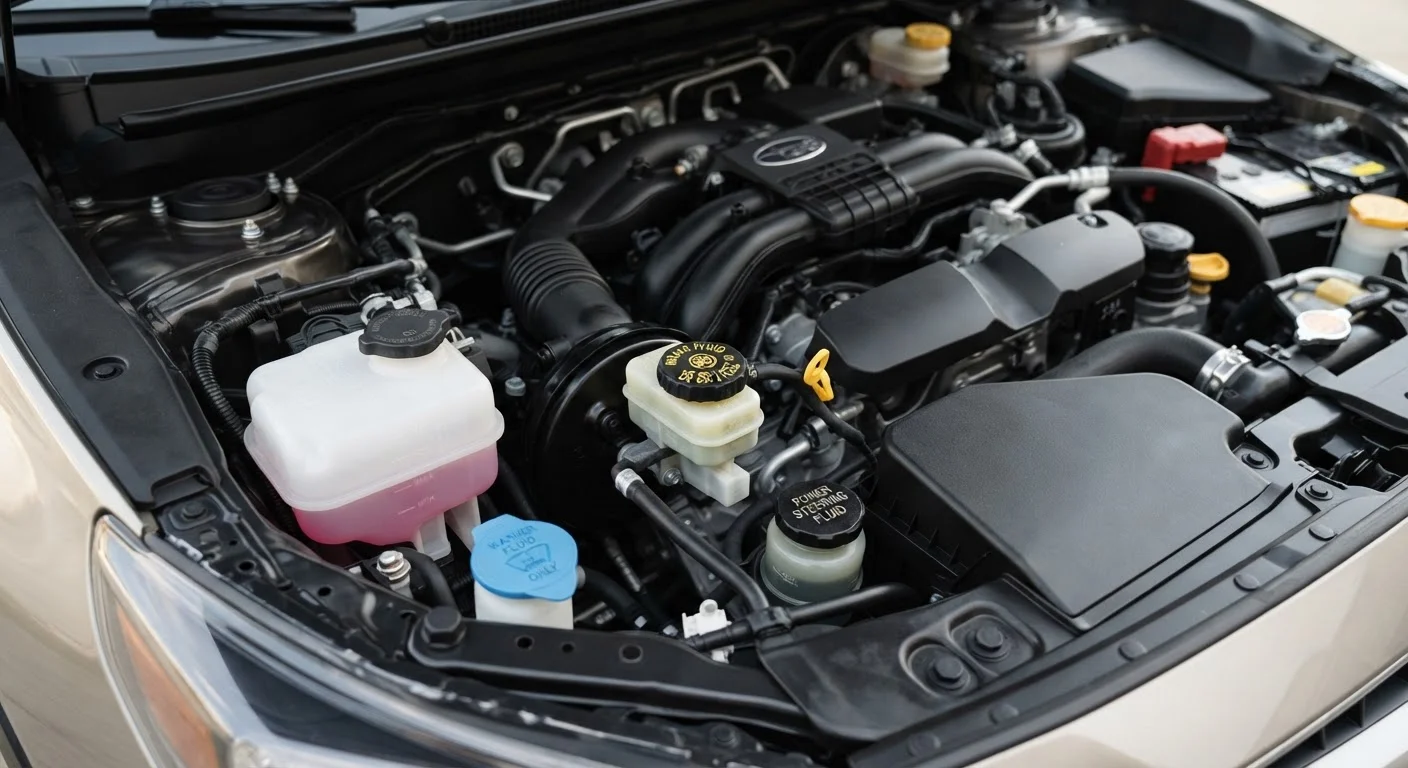
Coolant circulates through the engine to absorb heat, then releases it through the radiator. It also prevents freezing in winter and corrosion year-round. The reservoir has a min and max line — the level should sit between them when the engine is cold. Coolant is typically bright green, orange, or pink; a rusty or oily appearance means it's time for a flush. Never open the radiator cap on a hot engine — pressurized coolant can cause serious burns.
Brake Fluid
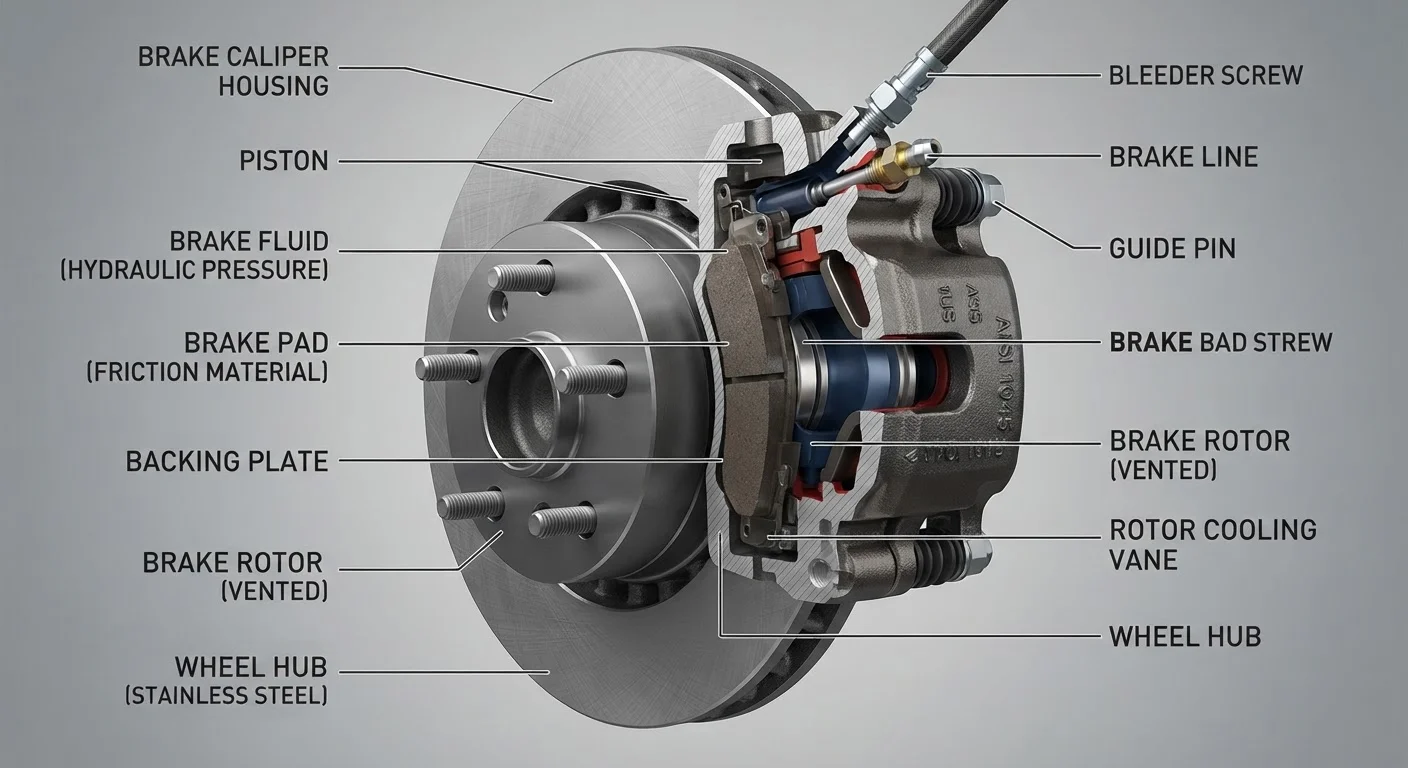
Brake fluid transmits the force from your brake pedal through hydraulic lines to the brake calipers that clamp your wheels to a stop. It's hygroscopic, meaning it absorbs moisture from the air over time, which lowers its boiling point and reduces braking effectiveness. Check the level in the translucent reservoir near the firewall; the fluid should be clear to pale yellow. Dark or murky fluid warrants a flush. For a deeper look at how braking components work together, see how your braking system actually works.
Transmission Fluid
Transmission fluid lubricates the gears and clutch packs inside your transmission and also acts as a hydraulic fluid in automatic transmissions. Checking it varies by vehicle — some have a dipstick, others require a professional check. Healthy fluid is typically red and translucent; dark, burnt-smelling fluid indicates it needs to be changed. Neglecting it is one of the more expensive maintenance mistakes a driver can make.
Power Steering Fluid
Power steering fluid keeps your steering responsive and smooth by providing hydraulic assist. (Note: many newer vehicles use electric power steering and have no fluid reservoir.) Low fluid often produces a whining or groaning sound when turning — a symptom covered in detail in our guide to sounds your car makes and what each one usually signals. Check the reservoir level and look for reddish or clear fluid; replace if dark or foamy.
Windshield Washer Fluid
Washer fluid doesn't affect engine health, but running out at the wrong moment is a real safety issue. Use purpose-made washer fluid rather than plain water, which can freeze in cold temperatures and doesn't cut road grime as effectively. Top it off whenever it runs low — it's the simplest under-hood task there is.
Warning Signs You Shouldn't Ignore
Fluid problems often announce themselves before serious damage sets in. Dashboard warning lights for oil pressure, coolant temperature, and brake system are the most urgent — if any of these illuminate while driving, treat them as immediate. For a full breakdown of what those icons mean, see what your dashboard warning lights are actually telling you.
Puddles under a parked car are another clear signal. Oil leaves a dark brown or black spot; coolant leaves a sweet-smelling, often colorful puddle; brake fluid typically appears near a wheel or under the firewall. Any active leak should be evaluated by a qualified mechanic promptly — and deferring that visit can cost far more in the long run.
This article is for general informational purposes. Always consult your vehicle's owner's manual for manufacturer-specific service intervals, and have a licensed mechanic inspect any fluid leak or warning light you're unsure about.