Why Basic Car Maintenance Matters
Owning a car comes with an ongoing responsibility that goes beyond filling the gas tank. Regular maintenance is what keeps a vehicle running safely and reliably — and neglecting it is one of the most common and preventable reasons cars break down or require expensive repairs.
The good news: you don't need mechanical expertise to stay on top of the basics. Understanding a handful of fundamentals puts you in a stronger position to catch problems early, communicate clearly with a shop, and avoid being caught off guard by unexpected failures. If you're still in the process of choosing a vehicle, our guide to the car-buying process walks through what to consider before you sign anything.
Your Owner's Manual Is Your Best Tool
Most new drivers never open the owner's manual — and that's a missed opportunity. It contains the maintenance schedule, fluid specifications, and warning light explanations specific to your exact vehicle. Keep it in your glove compartment or download the digital version from your automaker's website.
The Fluids Your Car Depends On
A car runs on several fluids simultaneously, and low levels in any of them can lead to component damage. These are the main ones to know:
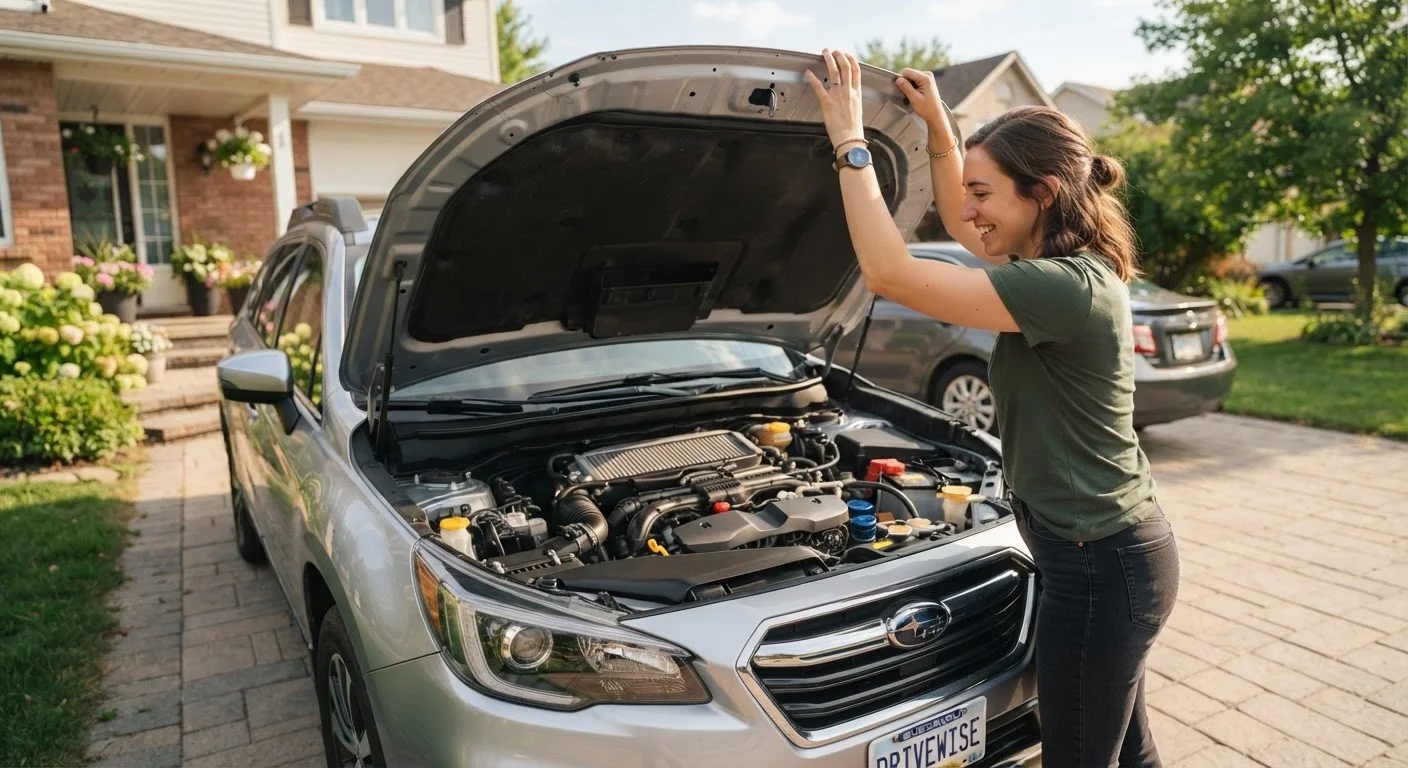
- Engine oil lubricates the moving metal parts inside your engine. Check it with the dipstick under your hood — the oil should fall between the two markers and appear clean, not black and gritty. How often to change it depends more on your owner's manual than any universal rule.
- Coolant (antifreeze) regulates engine temperature and prevents overheating. It's stored in a translucent reservoir; the level should sit between the MIN and MAX lines when the engine is cold.
- Brake fluid transmits the pressure that activates your brakes. It lives in a small reservoir near the firewall. If it's consistently low, have a mechanic check for a leak — brakes are a safety system.
- Power steering fluid (on vehicles without electric power steering) makes steering easier. Check it monthly if your car uses it.
- Windshield washer fluid is the one fluid you can refill yourself without any mechanical knowledge.
Dipstick
A long, thin metal rod attached to your engine that you pull out to check the oil level. Wipe it clean, reinsert fully, then pull it out again to get an accurate reading.
Coolant (Antifreeze)
A liquid that circulates through your engine to regulate its temperature. It prevents both overheating in summer and freezing in winter.
Tread depth
The measurement of the grooves in your tire surface. More tread means better grip on wet roads; worn tread increases stopping distances and the risk of hydroplaning.
Brake pads
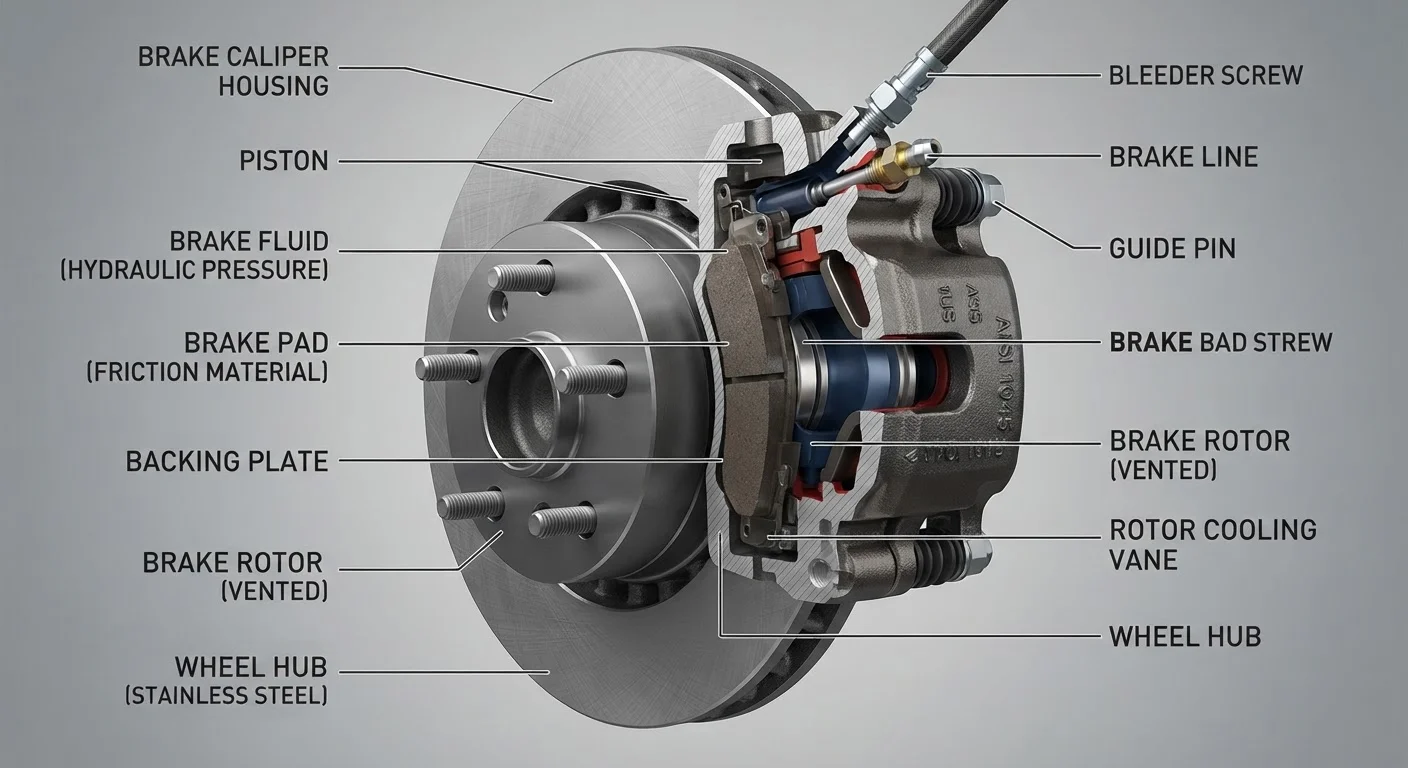
The friction material that presses against the brake rotor to slow your car. They wear down gradually and must be replaced before they become dangerously thin.
Maintenance schedule
A manufacturer's timeline — listed in your owner's manual — specifying when particular vehicle components should be inspected, serviced, or replaced.
Tire pressure (PSI)
The amount of air inside your tire, measured in pounds per square inch. The correct level for your car is listed on a sticker in the driver's door jamb, not on the tire itself.
Tires, Brakes, and Lights: What to Check Regularly
Three systems affect your safety most directly on every drive: tires, brakes, and lighting.
Tires
Tire pressure matters more than most new drivers realize. Under-inflated tires wear unevenly, reduce fuel efficiency, and can affect handling. Check pressure monthly with an inexpensive gauge — the correct pressure for your vehicle is listed on a sticker inside the driver's door jamb, not on the tire sidewall. Tread depth is equally important; the penny test is the quickest way to check it. Seasonal temperature swings can cause pressure to drop noticeably — plan to check more often in winter.
Brakes
Squealing during normal stops typically signals worn brake pads. A grinding noise — metal on metal — means pads are likely fully worn and the rotors may be damaged. Either symptom warrants a prompt visit to a qualified mechanic. Brakes are not a system to defer maintenance on.
Lights
Walk around your car periodically to verify all headlights, taillights, brake lights, and turn signals are functioning. A burned-out bulb is inexpensive to fix and can prevent a traffic stop or, more importantly, a collision.
Scheduled Maintenance: Using Your Owner's Manual
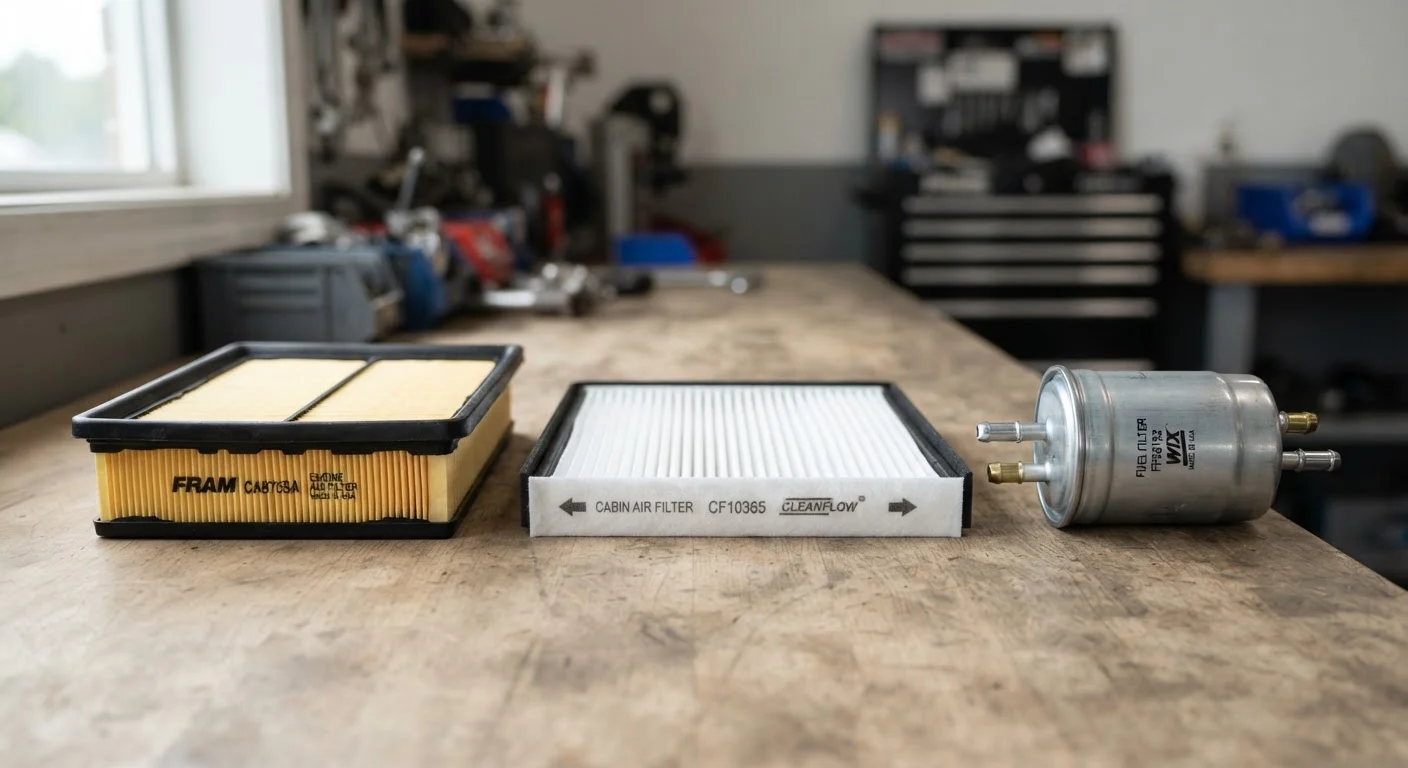
Every vehicle comes with a manufacturer's maintenance schedule specifying when to service components like the engine air filter, transmission fluid, spark plugs, and timing belt or chain. This schedule — found in your owner's manual — is based on engineering data for your specific engine and drivetrain. It is more reliable than generic advice you might encounter online or at a service counter.
Most modern vehicles also have a built-in maintenance reminder system that tracks mileage and driving conditions, prompting you when service is due. When that alert appears, don't dismiss it — use it as a cue to schedule an appointment. If you're unsure what a line item on a shop estimate actually means, this breakdown of mechanic estimates can help you read it clearly before authorizing work.
As your vehicle accumulates mileage, maintenance priorities shift. High-mileage vehicles require a different approach that goes beyond routine service intervals.
Warning Signs You Should Never Ignore
Your car communicates through sounds, smells, and dashboard indicators. Learning to recognize these signals early is what separates drivers who catch small problems before they become large ones.
- Dashboard warning lights: Oil pressure, battery, coolant temperature, and check engine lights all indicate specific system issues. Pull over safely if the oil or coolant temperature light activates while driving.
- Unusual smells: A burning smell after driving may indicate an oil leak contacting a hot surface. A sweet smell could signal coolant leaking. Either warrants prompt inspection.
- Vibrations or pulling: Steering that pulls to one side or a steering wheel that vibrates may indicate tire, wheel alignment, or suspension issues.
- Fluid spots under the car: A puddle beneath a parked vehicle — other than clear water from air conditioning condensation — is worth having examined.
When in doubt, consult a qualified mechanic rather than waiting to see if a symptom resolves. For context on which tasks are reasonable to handle yourself versus when professional help is warranted, see our guide on DIY car maintenance vs. taking it to a shop.