
Why Your Car's Sounds Are Worth Taking Seriously
Your car communicates constantly. Most of the time it hums along quietly, but when something changes — a new squeal, a rhythmic knock, a hiss after you park — that shift in sound is your vehicle flagging that something has changed mechanically. The challenge is knowing which sounds demand immediate action and which are worth monitoring over a few days.
This guide breaks down the most common car noises, what each one typically points to, and how urgently you should respond. None of this replaces a diagnosis from a qualified mechanic, but understanding the language your car uses puts you in a much stronger position before you walk into a shop. If you're still building foundational knowledge, the plain-English maintenance guide for new drivers is a useful starting point.
Grinding When You Brake
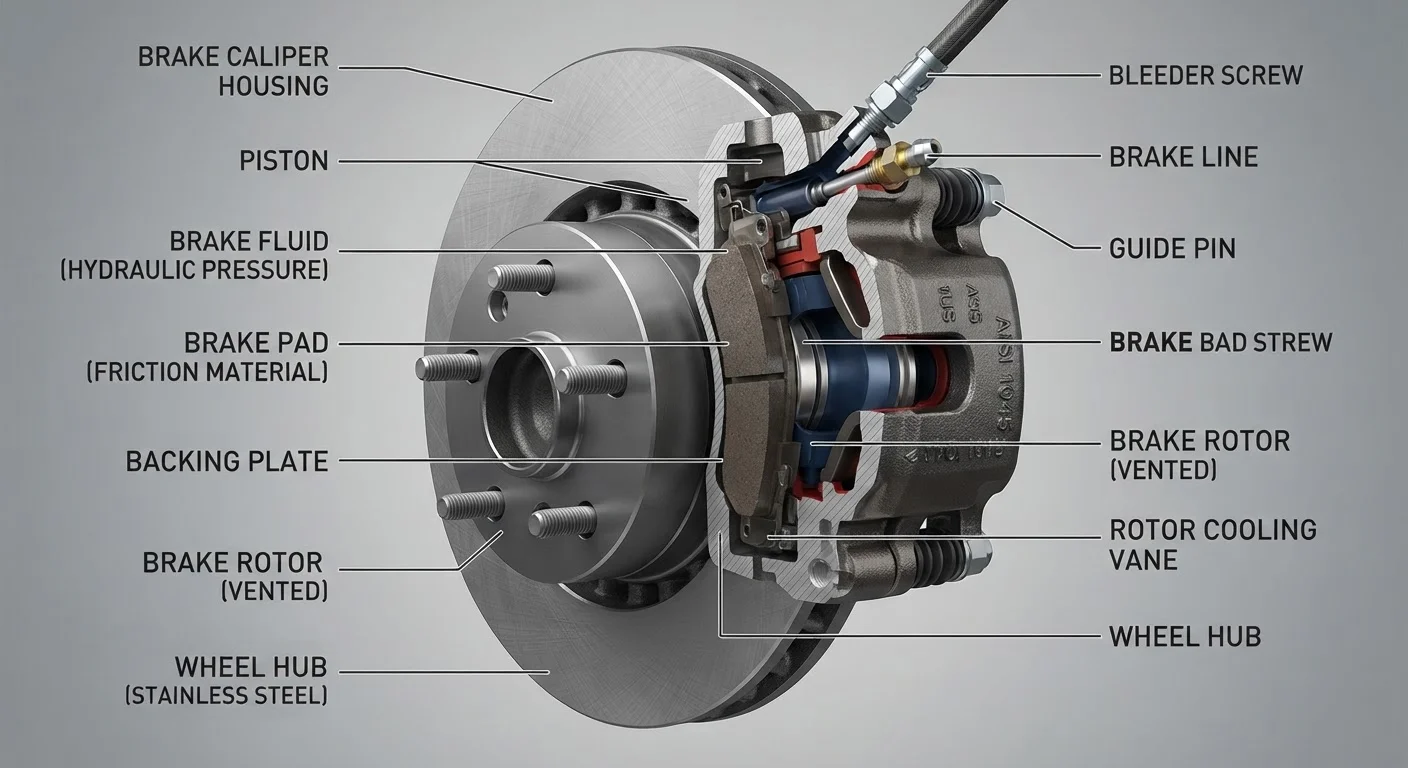
A grinding or metal-on-metal scraping sound that appears when you press the brake pedal is one of the more urgent noises a driver can hear. It usually means brake pads have worn down past their usable material, and the metal backing plate is now contacting the rotor directly. Left unaddressed, this damages the rotor — a more expensive component — and reduces braking effectiveness.
A high-pitched squealing without grinding often means pads are worn but not yet at the metal-on-metal stage; many pads include a small wear indicator that deliberately squeals to alert you. Either way, have brakes inspected promptly. Fluids play a connected role here too — see what brake fluid does and how to check it.
Metal-on-metal grinding while braking typically means pads are gone — act before the rotors are damaged.
Knocking or Pinging from the Engine
A rhythmic knocking or light pinging from the engine bay — especially under acceleration — often relates to the combustion process. "Engine knock" (also called detonation) happens when the air-fuel mixture in a cylinder ignites unevenly or at the wrong time. Common causes include using a lower octane fuel than the engine requires, carbon buildup in the cylinders, or a timing issue.
A deeper, slower knock — sometimes described as a rod knock — can signal a more serious internal engine problem, often related to low oil pressure or bearing wear. Check your oil level first. If the knocking is persistent, worsens under load, or is accompanied by the oil pressure warning light, stop driving and consult a mechanic before the problem escalates.
Persistent engine knock under acceleration is a signal worth investigating before it becomes a major repair.
Hissing Under the Hood
A hissing sound — particularly one you notice right after turning off the engine or during idle — often points to a fluid or pressure leak. Coolant dripping onto a hot engine surface produces a distinctive hiss; so does a vacuum hose leak, which can affect engine performance and fuel economy. A refrigerant leak from the air conditioning system may also hiss.
Don't ignore coolant-related hissing. Overheating is one of the fastest ways to cause serious engine damage. If the temperature gauge climbs toward the red zone or you see steam from the hood, pull over safely and let the engine cool completely before investigating. Never open a hot radiator cap — the pressurized coolant inside can cause serious burns.
A hiss near the engine combined with a rising temperature gauge calls for immediate attention — don't keep driving.
Rumbling or Humming That Changes with Speed
A low rumble or humming noise that grows louder as vehicle speed increases — and sometimes changes pitch when you change lanes or shift weight — often points to a worn wheel bearing. Wheel bearings allow the wheels to rotate smoothly; when they wear out, they produce a characteristic drone that varies with speed and steering input.
A failing wheel bearing shouldn't be postponed for long. As it deteriorates, it can affect vehicle handling and, in advanced cases, create a safety risk. A mechanic can confirm which bearing is affected by lifting the vehicle and testing the wheel for play or noise.
A droning hum that shifts when you steer is a classic wheel-bearing symptom worth diagnosing soon.
Clunking Over Bumps
A clunk or thud that appears specifically when driving over bumps, turning, or going through dips usually lives in the suspension system. Worn ball joints, damaged sway bar links, and degraded strut mounts are among the common culprits. These components absorb road impacts and keep the wheels properly aligned; when they wear out, you feel and hear it.
Suspension clunks tend to worsen gradually. Because these components affect both ride quality and vehicle stability, it's worth having a shop perform a visual suspension inspection. Many shops include this as part of a routine tire rotation — a practical time to catch wear before it becomes a handling problem.
Suspension clunks over bumps often mean worn joints or mounts — catching them early protects ride safety.
Rattling from Underneath at Low Speeds
A rattling noise coming from the underside of the vehicle — particularly prominent at low speeds or when idling — often involves the exhaust system. Heat shields (metal covers protecting surrounding components from exhaust heat), loose exhaust hangers, or a cracked heat shield can vibrate against the exhaust pipe or chassis and produce a distinctive rattle.
In most cases this is more annoying than immediately dangerous, but a compromised exhaust system can allow carbon monoxide to enter the cabin in rare circumstances — reason enough not to ignore it indefinitely. A shop can inspect and resecure or replace loose exhaust components at relatively low cost when caught early.
Exhaust rattles are often inexpensive to fix early — and worth addressing before they become a cabin safety concern.
Acting on What You Hear
Sound diagnosis is a starting point, not a final verdict. A grinding noise could have more than one cause, and the same symptom in two different vehicles may call for different repairs. What matters most is treating new or worsening sounds as information rather than background noise.
Record the Sound Before Your Shop Visit
If your car makes an intermittent noise that stops when you're at the shop, a short voice memo or video recording on your phone can be genuinely helpful to a mechanic. Note when the sound happens — at what speed, during braking, on acceleration, or only over bumps — and whether it changes with temperature. The more context you can provide, the faster and more accurately the problem can be pinpointed.
Dashboard warning lights often appear alongside unusual sounds, and reading both together gives you a clearer picture. The guide to dashboard warning lights explains how those signals interact with what you're hearing. For anything related to your braking system specifically, understanding how brakes actually work helps you evaluate the urgency with more confidence.
When in doubt, have a licensed mechanic inspect the vehicle. Early attention to unfamiliar sounds is almost always less costly — and safer — than waiting.