What Each Oil Actually Is
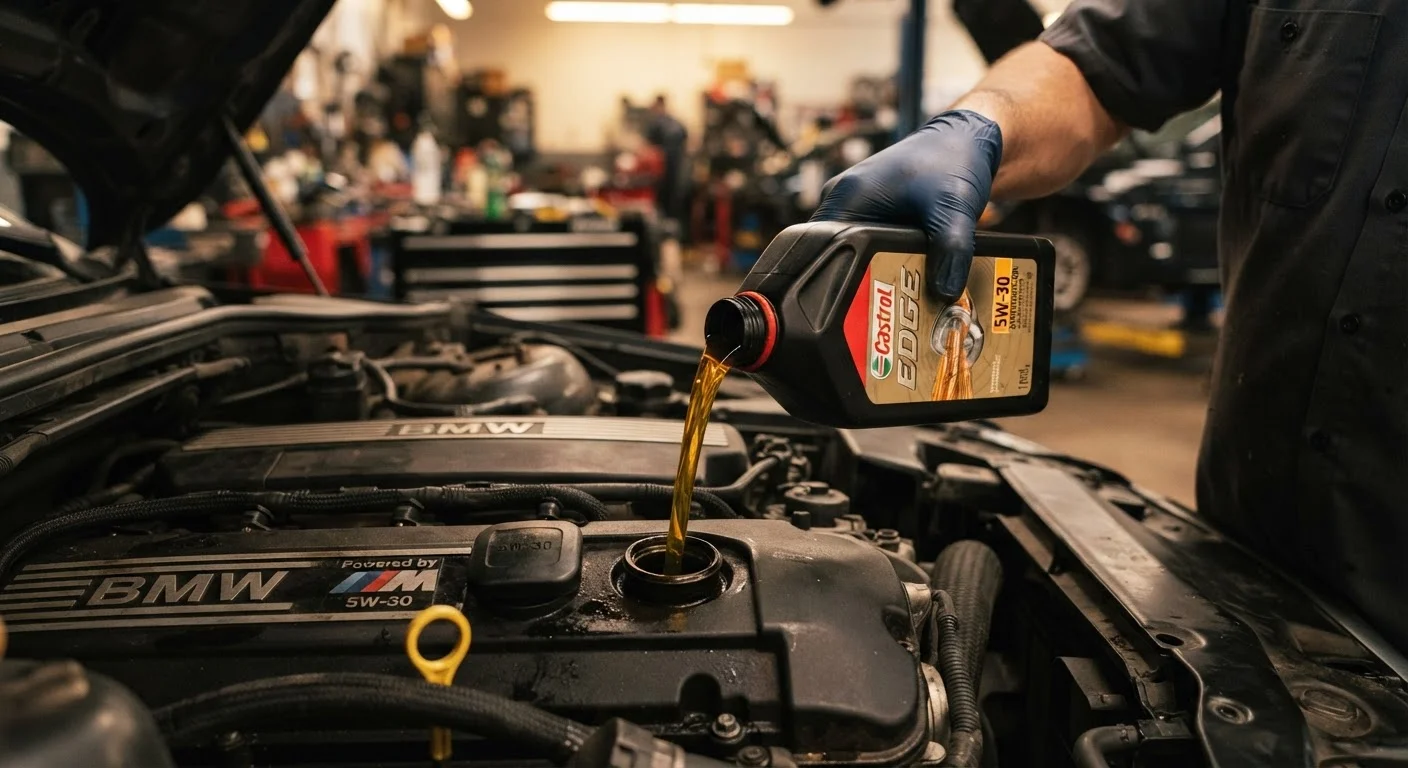
Motor oil's primary job is straightforward: lubricate moving engine parts, reduce friction, carry away heat, and suspend contaminants until they're drained at an oil change. How each oil type accomplishes that job differs significantly at the molecular level.
Conventional motor oil starts as crude petroleum extracted from the ground. Refining removes many harmful compounds, but natural variations in molecular size and shape remain. This inconsistency means the oil can break down faster under heat and stress.
Synthetic motor oil is built in a laboratory. Scientists start with a base stock — often derived from natural gas or refined crude — and engineer uniform molecules designed to perform under specific conditions. The result is an oil with fewer impurities and more predictable behavior across temperature extremes.
There's also a middle ground: synthetic blend oil mixes both types, offering some enhanced performance at a lower price point than full synthetic. For the purposes of this comparison, we focus on the two primary categories. To understand where motor oil fits among all your vehicle's fluids, see our guide to fluids under your hood.
Head-to-Head: Key Differences at a Glance
The differences between these two oil types touch on chemistry, performance, and cost. The table below summarizes the most important factors everyday drivers should weigh.
| Criterion | Synthetic Motor Oil | Conventional Motor Oil |
|---|---|---|
| Base composition | Engineered molecules, highly uniform | Refined crude petroleum, less uniform |
| Cold-weather flow | Flows more readily at low temperatures | Thickens more noticeably in cold |
| Heat resistance | Higher thermal stability | Breaks down faster under high heat |
| Typical drain interval | Often 7,500–10,000+ miles (varies by vehicle) | Often 3,000–5,000 miles (varies by vehicle) |
| Cost per quart | Higher upfront cost | Lower upfront cost |
| Sludge resistance | Strong resistance to sludge formation | More prone to sludge under stress |
| Best engine match | Modern, turbocharged, tight-tolerance engines | Older, simpler engine designs |
One detail the table can't fully capture: your vehicle's owner's manual overrides general guidance. Always confirm the viscosity grade and oil type your manufacturer specifies — particularly on newer vehicles, which are increasingly factory-filled with full synthetic.
Performance, Protection, and Oil Change Intervals
The engineering advantage of synthetic oil shows up most clearly in two scenarios: extreme temperatures and high-stress engines.
In cold weather, conventional oil thickens more noticeably, which means engine parts experience brief metal-to-metal contact during cold starts before oil pressure builds. Synthetic oil flows more readily at low temperatures, providing faster lubrication from the moment you turn the key.
At the high end, turbocharged engines cycle exhaust gases near oil passages, generating heat that accelerates conventional oil's breakdown into sludge — a thick deposit that can clog oil passages over time. Synthetic oil's thermal stability resists this process more effectively.
These properties also affect how long oil remains protective. Many synthetic-specified vehicles carry manufacturer-recommended intervals of 7,500 to 10,000 miles or more, while conventional oil change guidance has traditionally run shorter. That said, interval recommendations vary widely by vehicle and driving conditions. For a full breakdown of how modern interval thinking has evolved, see why the old 3,000-mile rule is largely outdated.
Cost Considerations and Which to Choose
Synthetic motor oil costs more per quart — often two to four times the price of conventional. However, that calculation shifts when you factor in fewer oil changes per year and reduced engine wear over time. Neither outcome is guaranteed, and individual results depend heavily on vehicle condition, driving habits, and how well you follow your maintenance schedule.
The practical answer for most drivers: follow your owner's manual. If it specifies synthetic, use synthetic — substituting conventional oil in a synthetic-specified engine can void warranties and may leave critical components underprotected. If your older vehicle has run on conventional oil without issue, switching isn't necessarily required, but consulting a trusted mechanic before changing oil types is always worthwhile.
This article is for general informational purposes only. Always consult your vehicle's owner's manual and a qualified mechanic for maintenance decisions specific to your car.