What Price Anchoring Actually Is
Price anchoring is a cognitive bias in which the first number a person encounters — the "anchor" — disproportionately shapes how they evaluate all prices that follow. It was documented extensively in behavioral economics research, including foundational work by psychologists Amos Tversky and Daniel Kahneman, who showed that people rely heavily on the first piece of numerical information they see when making estimates or judgments.
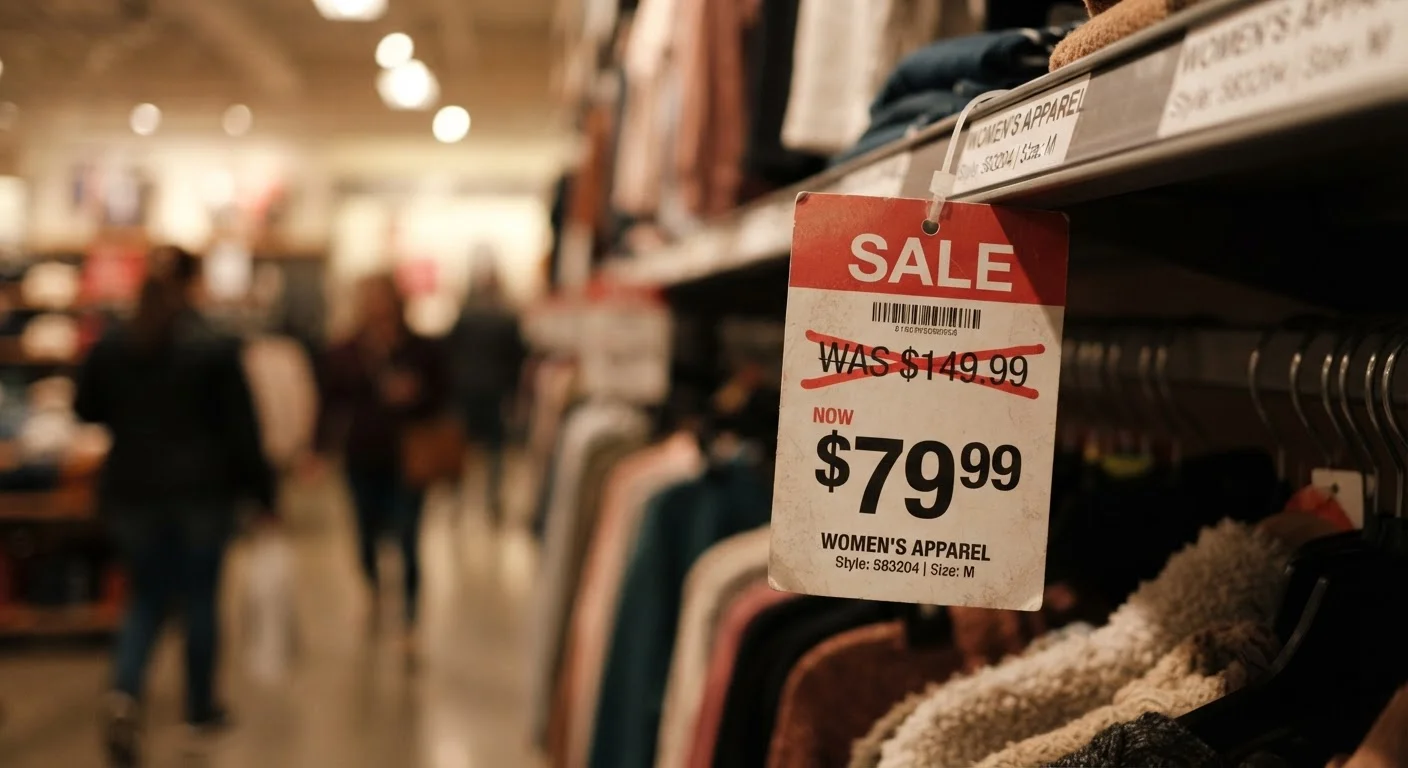
In a retail context, anchoring happens constantly. A jacket tagged at $300 "originally" that now shows $179 feels like a bargain — not because $179 is objectively reasonable for that jacket, but because your mind is measuring it against the $300 anchor. The anchor sets the emotional frame; everything below it reads as savings.
What makes anchoring especially effective is that it works even when people know they're being influenced. Awareness reduces but rarely eliminates the effect. That's why it remains one of the most pervasive and durable tools in retail pricing strategy. Understanding retail environments more broadly — including layout and visual cues — can help you recognize these tactics in action. How retail spaces are designed to guide your decisions is a related dynamic worth exploring.
Common Myths About Sale Prices and Discounts
Anchoring fuels several persistent shopping misconceptions. The myth-vs-fact breakdowns below address the most common ones directly.
Myth
If a price is marked down from a higher number, the discount reflects real savings.
Fact
The "original" price on a tag is set by the retailer and may not reflect what the item ever sold for at scale — or what it's genuinely worth.
Regulatory agencies, including the Federal Trade Commission, have issued guidance warning that "original" or "compare at" prices can be misleading if the item was never meaningfully sold at the higher price. A manufacturer suggested retail price (MSRP) — the benchmark often shown as the anchor — is frequently a list price that almost no one actually pays. The discount arithmetic is real; the baseline it measures from may not be.
Myth
A bigger discount percentage always means a better deal.
Fact
Discount percentage is a function of the anchor price, not an independent measure of value. A 60% discount on an inflated anchor can still leave you overpaying.
Retailers can legally set anchor prices high enough that deep-looking discounts still result in margins favorable to the seller. The percentage figure triggers the part of human psychology that responds to proportional gains — behavioral economists call this the "deal heuristic." Focusing on the final price relative to alternatives in the market, rather than on the discount size, leads to more accurate value judgments. Price anchoring has become more visible to consumers in the context of rising costs; how inflation reshaped American purchasing priorities is relevant context here.
Myth
Premium-priced items on display near lower-priced ones confirm that the lower price is fair.
Fact
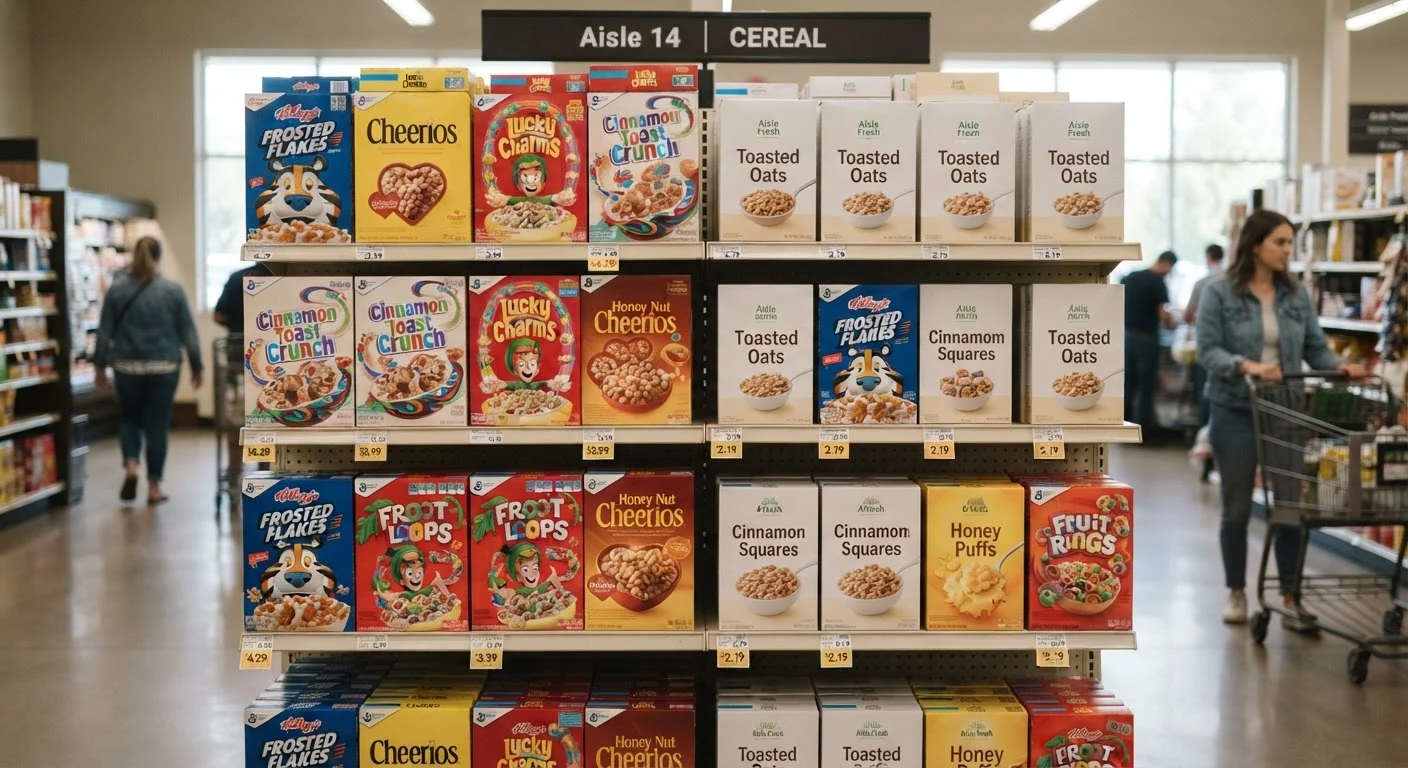
Strategic product adjacency is a deliberate anchoring technique — the premium item often exists primarily to make neighboring products feel reasonably priced.
This is sometimes called "decoy pricing" or the "contrast effect." A $900 appliance placed next to a $450 model doesn't tell you the $450 model is well-priced; it tells you the retailer wants you to perceive it that way. The premium option may be stocked in limited quantities specifically to serve this anchoring role. Evaluating each product's price independently — including by researching comparable models from other sources — neutralizes the effect.
Myth
Online "limited time" sale prices are anchored to what the item normally costs.
Fact
E-commerce platforms frequently use dynamic pricing, meaning the "original" price may fluctuate and the anchor shown at any moment may not represent a stable baseline.
Several consumer research investigations have found that prices on major e-commerce platforms can shift dozens of times per day based on demand signals, competitor pricing, and algorithmic models. A "was $89" anchor shown during a sale event may reflect a price that held for only a brief window. Browser extensions and price-history tools exist to help consumers see pricing over time, providing a more reliable reference point than the anchor displayed at checkout.
How to Evaluate a Price on Its Own Terms
The most effective counter to anchoring is to shift your reference point away from the retailer's chosen anchor. Instead of asking "how much am I saving compared to the original price?", ask what the item is actually worth to you, and what comparable alternatives actually cost.
Several concrete frameworks help here. Cost-per-use analysis — dividing total price by how many times you expect to use the item — reframes value around utility rather than discount depth. Calculating price per use can reveal when a pricier item is actually more economical than a cheaper one. Similarly, considering total cost of ownership — maintenance, consumables, and eventual replacement — gives a fuller picture than sticker price alone. Total cost of ownership is a framework that applies across product categories.
A simple habit: before checking if something is "on sale," decide what you'd reasonably pay for it based on your own needs and market research. That self-set anchor is harder for retailers to override. For a practical complement to this approach, see unit price, total cost, and cost-per-use calculations — three numbers that often tell a more honest story than any sale tag.