What Actually Separates the Two
The core difference is where each bag lives on the plane. A personal item slides under the seat directly in front of you — think backpacks, totes, laptop bags, and small duffel bags. A carry-on goes into the overhead bin above your row.
Size limits are the real distinguishing factor, and they vary by airline. As a general rule, most U.S. carriers allow personal items up to roughly 18 x 14 x 8 inches, while standard carry-ons typically max out around 22 x 14 x 9 inches. However, these are not universal — budget carriers in particular can set tighter restrictions. Always verify dimensions directly on your airline's website before you pack, especially for international routes where rules can tighten further.
There's also a cost dimension worth knowing. Major U.S. carriers typically include both a personal item and a carry-on in their main-cabin fares, but many low-cost carriers include only the personal item. A carry-on can then run anywhere from $30 to $70 or more each way depending on the route and how far in advance you add it. If you're comparing ticket prices across airlines, factor in bag fees — what looks like a cheaper ticket may not be after bags are counted.
| Criterion | Personal Item | Carry-On Bag |
|---|---|---|
| Storage location on plane | Under the seat in front | Overhead bin |
| Typical size limit | ~18 x 14 x 8 inches | ~22 x 14 x 9 inches |
| Usually included in fare | Yes, on most carriers | Not always on budget carriers |
| Best use case | Essentials, valuables, in-flight needs | Clothing, gear, multi-day supplies |
| Risk of gate-check | Low (if sized correctly) | Higher on full flights |
| Ideal trip length | Same-day to one night | Two nights or more |
How to Pack Each One Smartly
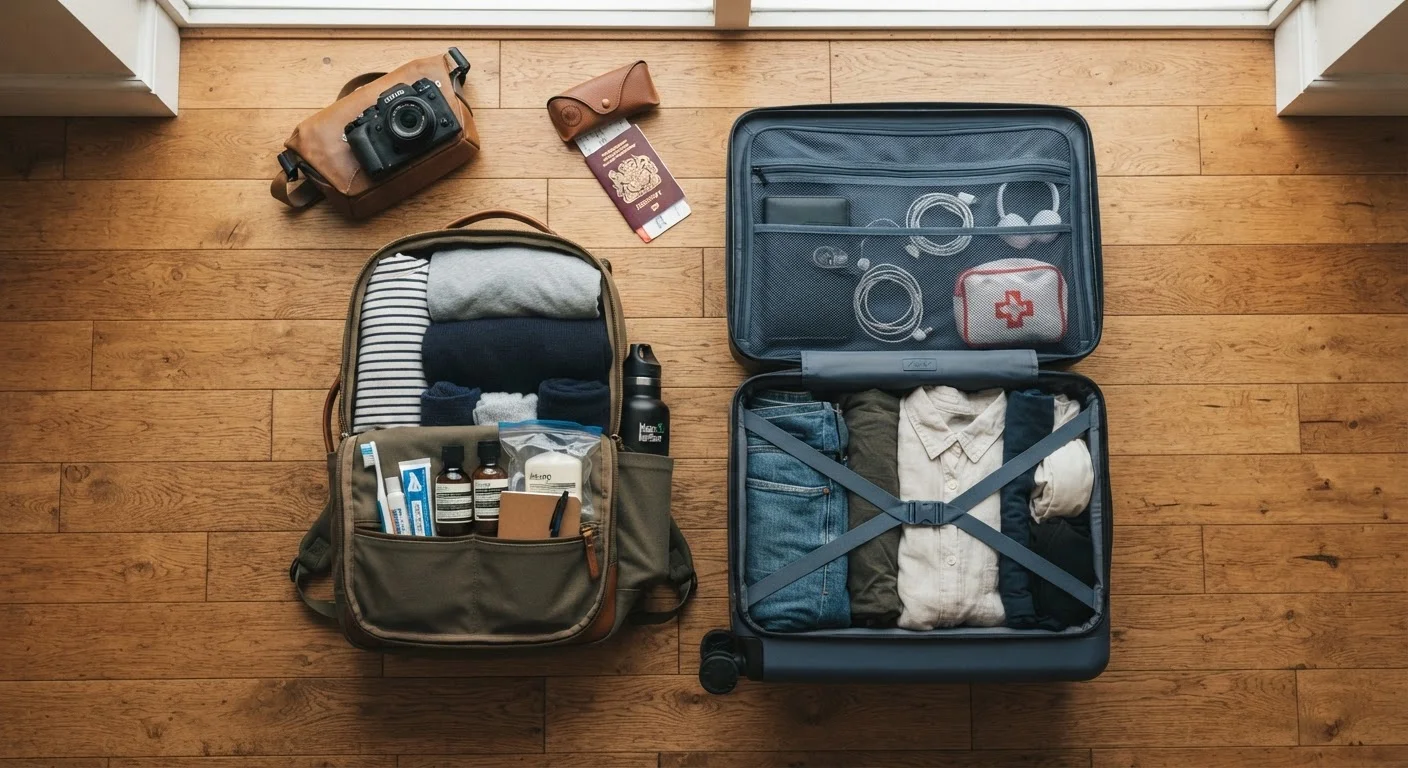
Think of your two bags as a system, not two separate puzzles. Your carry-on is the bulk container; your personal item is your in-flight command center.
The Personal Item: Pack for Access
Because it lives at your feet, your personal item should hold everything you'll want during the flight or need the moment you land: your phone charger, earbuds, a book or tablet, any medications, a snack, and your travel documents. If you're a light packer, a well-organized 20-liter backpack can actually handle a full weekend trip on its own — especially if you lean on packing strategies covered in our guide to packing light without sacrificing comfort.
The Carry-On: Pack for Volume and Compliance
Start with your largest items — shoes, rolled clothing — and fill gaps with softer items. Keep your toiletries bag accessible near the top for TSA screening. Crucially, don't overstuff: an overfull carry-on that can't close or fit the sizer at the gate is exactly what triggers a gate-check. Our separate piece on why carry-ons get gate-checked goes deeper on avoiding that outcome.
One practical tip: pack your carry-on as if your personal item doesn't exist. If your carry-on gets gate-checked unexpectedly, everything you truly need — medications, valuables, a change of clothes if possible — should already be in your personal item.
When One Bag Is Enough — and When You Need Both
For same-day trips, overnight stays, or compact travel styles, a single personal item is genuinely sufficient. It gets you through security faster, eliminates overhead-bin competition, and means you walk off the plane and straight out of the airport. If you're planning a longer journey, see our pre-departure checklist for a broader view of what to sort out before you fly.
For trips of three or more nights — or any trip that involves varied weather, business attire, or specialized gear — a carry-on earns its place. The combination of both bags is where experienced travelers really shine: the carry-on handles the bulk, and the personal item stays nimble. As part of your overall international trip planning, locking in your bag strategy early helps you pack intentionally rather than reactively.
Airline Rules Change — Always Verify
Bag size policies, fee structures, and enforcement strictness vary significantly across carriers and can change without much notice. Before any trip, check your airline's current baggage policy page directly — not a third-party aggregator. This is especially important on international routes or when flying with a carrier you haven't used before, as regional partners and codeshare flights may apply different rules.
Whatever your bag setup, weigh and measure both bags before you leave home — not at the curb. Airlines enforce size and weight limits at check-in and at the gate, and the cost of non-compliance (checked-bag fees or gate-check fees) can add up quickly.