Why These Two Factors Are Tied to Serious Safety Risks
Tire-related crashes are a significant and preventable problem on American roads. According to the National Highway Traffic Safety Administration (NHTSA), tire failures — including blowouts and tread separation — contribute to thousands of crashes and hundreds of fatalities each year. The two most common underlying causes are improper inflation and worn-out tread.
The frustrating reality is that most drivers can't easily detect either problem by looking at their tires from a distance. A tire can be dangerously underinflated without appearing noticeably flat. Tread wear happens gradually and symmetrically enough that it often goes unnoticed until a routine inspection catches it — or until it doesn't get caught at all. Understanding what to measure and what the numbers mean is the first line of defense.
~11,000
Tire-related crashes annually in the U.S.
According to NHTSA data, tire failure contributes to roughly 11,000 crashes per year on American roads.
1 PSI
Pressure lost per 10°F temperature drop
This well-documented relationship between temperature and air pressure explains why TPMS warnings are especially common in fall and winter.
2/32"
Legal minimum tread depth in most U.S. states
At this depth, wet-weather stopping distances increase significantly compared to tires with new or near-new tread.
Tire Pressure: What the Numbers Actually Mean
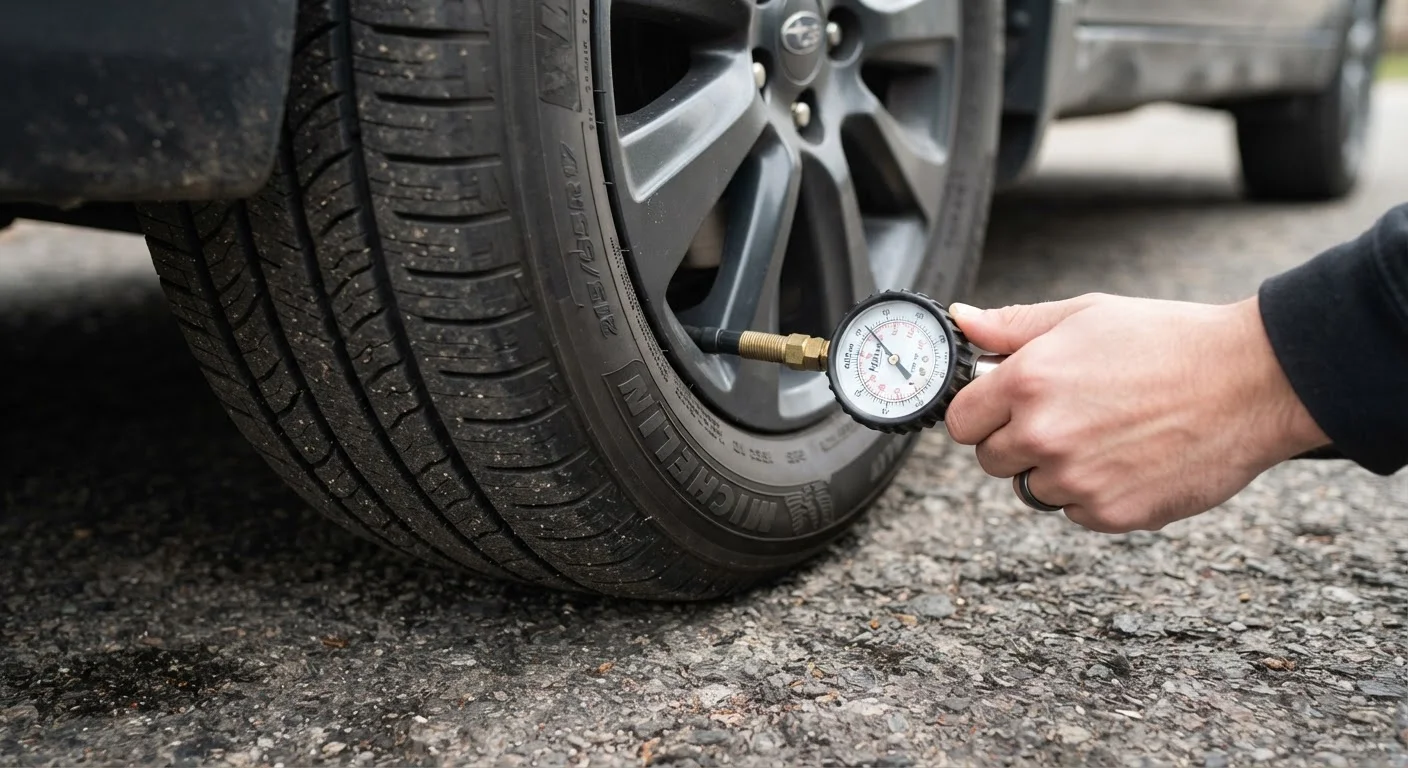
Tire pressure is measured in PSI — pounds per square inch. Your vehicle has a specific recommended PSI range, and staying within it keeps the tire's contact patch (the portion touching the road) at its intended shape and size. Deviate in either direction and you compromise control.
- Underinflation causes the tire's sidewalls to flex excessively, building heat. Over time, this heat degrades the tire's internal structure and can lead to sudden failure. It also increases rolling resistance, lowering fuel economy.
- Overinflation shrinks the contact patch, reducing grip. The tire becomes stiffer and more vulnerable to impact damage from potholes or road debris.
One frequently misunderstood point: tires naturally lose pressure as temperatures drop. For every 10°F decrease in ambient temperature, tires lose roughly 1 PSI. This is why fall and winter are when many drivers unknowingly start driving on underinflated tires. If your TPMS light turns on after a cold snap, low pressure — not a puncture — is often the cause. Our dashboard warning lights explainer walks through what that indicator and others are actually signaling.
Tread Depth: The Grip Between You and the Road
Tire tread isn't decorative. The grooves channel water away from the tire's contact patch, maintaining grip on wet roads. As tread wears down, water has nowhere to go, increasing the risk of hydroplaning — where the tire rides on a film of water rather than the road surface itself.
In the U.S., the legal minimum tread depth in most states is 2/32 of an inch. At that level, wet-weather stopping distances increase dramatically. Independent tire safety testing has shown that tires at 2/32" can take significantly longer to stop on wet pavement compared to new tires — sometimes requiring double the stopping distance at highway speeds.
The penny test offers a tool-free check: insert a penny into the tread groove with Lincoln's head pointing down. If you can see the full top of his head, the tread has reached or passed the legal minimum. Using a quarter instead gives earlier warning — if you can see the top of Washington's head, you're at 4/32", which is a good threshold to start shopping for replacements, especially if wet weather is common where you drive.
For a practical, step-by-step approach to checking both tread and pressure at home, the home tire inspection walk-through is a useful next read.
How Both Factors Interact — and What to Do About It
Tire pressure and tread wear are not isolated issues — they influence each other. Chronically underinflated tires wear faster on the outer edges of the tread. Overinflated tires wear down the center strip. Either pattern accelerates the point at which you need replacement tires, and each creates handling characteristics that make the vehicle respond unpredictably in emergency situations.
Building a monthly habit of checking both takes less than five minutes. You'll need a tire pressure gauge (digital or stick-style, available at any auto parts store for a few dollars) and nothing but a penny for the tread check. Check pressure when the tires are cold — before driving more than a mile — for the most accurate reading.
Ignoring these basics has real financial consequences beyond safety. Underinflated tires reduce fuel economy, and accelerated tread wear means buying replacement tires sooner. Our article on the real cost of deferred maintenance puts this kind of preventable expense in broader context.
This article is for general informational and educational purposes only. For concerns about tire condition or vehicle safety, consult a qualified mechanic or tire professional.