What Makes a Protein 'Complete' — and Why It Matters
Proteins are built from amino acids, nine of which are classified as essential — meaning the body cannot produce them and must obtain them from food. A protein source is called complete when it contains all nine essentials in proportions sufficient to support body functions.
Animal proteins — including meat, poultry, fish, eggs, and dairy — are all complete proteins. Most plant proteins, by contrast, are lower in at least one essential amino acid. Legumes tend to be low in methionine, while grains tend to be low in lysine. This distinction is real, but it is frequently overstated: the body draws on a pool of amino acids throughout the day, so eating varied plant proteins across meals can meet all essential amino acid needs without any single food being complete on its own.
Understanding this distinction helps clarify why protein quality and protein quantity are both worth considering — and why diversity in the diet matters as much as the specific source you choose.
Bioavailability: How Much Protein Your Body Actually Uses
Bioavailability describes the proportion of a nutrient the body can absorb and use after digestion. For protein, this is often measured using the Digestible Indispensable Amino Acid Score (DIAAS), the current gold-standard metric endorsed by the Food and Agriculture Organization.
Animal proteins consistently score higher on bioavailability measures. Eggs, dairy, and meat typically have DIAAS values at or above 1.0, indicating that all essential amino acids are available in sufficient amounts. Many plant proteins score lower — soy and pea protein being notable exceptions that score relatively well. Antinutrients found in raw legumes and grains, such as phytates and tannins, can further reduce mineral and protein absorption, though cooking, soaking, and fermentation largely mitigate this effect.
| Animal Protein | Plant Protein | Blended Approach | |
|---|---|---|---|
| Amino acid completeness | Complete (all 9 essentials) | Often incomplete individually | Complete when combined |
| Bioavailability (DIAAS) | Generally high (≥1.0) | Variable; often lower | Moderate to high overall |
| Fiber content | None | High | Moderate to high |
| Saturated fat | Variable; higher in red/processed meat | Typically low | Depends on animal sources chosen |
| Key nutrients supplied | B12, heme iron, zinc, omega-3s | Fiber, phytonutrients, folate | Broad spectrum from both |
| Typical cost per gram of protein | Moderate to high | Low to moderate | Varies by food choices |
| Environmental impact | Generally higher | Generally lower | Lower than all-animal |
The practical takeaway: if your total daily protein intake is adequate, differences in bioavailability become less clinically significant for most healthy adults. Populations with higher needs — older adults, athletes, people recovering from illness — may benefit from paying closer attention to protein quality. Always consult a healthcare provider or registered dietitian for guidance tailored to your specific situation.
Beyond Protein: What Else Each Source Brings to Your Plate
Protein sources are not just protein delivery vehicles — they carry distinct nutritional packages. Animal proteins often arrive with saturated fat and cholesterol (especially red and processed meats), though they also supply nutrients that can be difficult to obtain from plants alone, including vitamin B12, heme iron, zinc, and omega-3 fatty acids (particularly in fatty fish).
Plant proteins bring substantial fiber, antioxidants, and phytonutrients that have their own established health associations. Research consistently links legume-rich, plant-forward dietary patterns to reduced risk of certain chronic diseases. For a deeper look at those dietary patterns, see eating patterns with the strongest research support.
People who eat little or no animal protein should monitor intake of vitamin B12, vitamin D, long-chain omega-3s, calcium, iron, and zinc, and may benefit from targeted supplementation under professional guidance. For a practical primer on shifting toward more plants, plant-based eating explained offers a useful starting framework.
The Blended Approach: Combining Both Worlds
A growing body of evidence and a shift in dietary guidance support what many people already practice intuitively: eating protein from both animal and plant sources. This blended approach allows individuals to capture the high bioavailability and amino acid completeness of animal proteins while benefiting from the fiber and phytonutrients found in legumes, nuts, seeds, and whole grains.
Mixing Sources Throughout the Day Is Enough
You don't need to combine complementary plant proteins at every single meal. Eating a variety of plant foods across the day — legumes, grains, nuts, seeds, vegetables — provides all essential amino acids for most healthy adults. Intentional pairing at every meal is not required, though it is still a practical strategy.
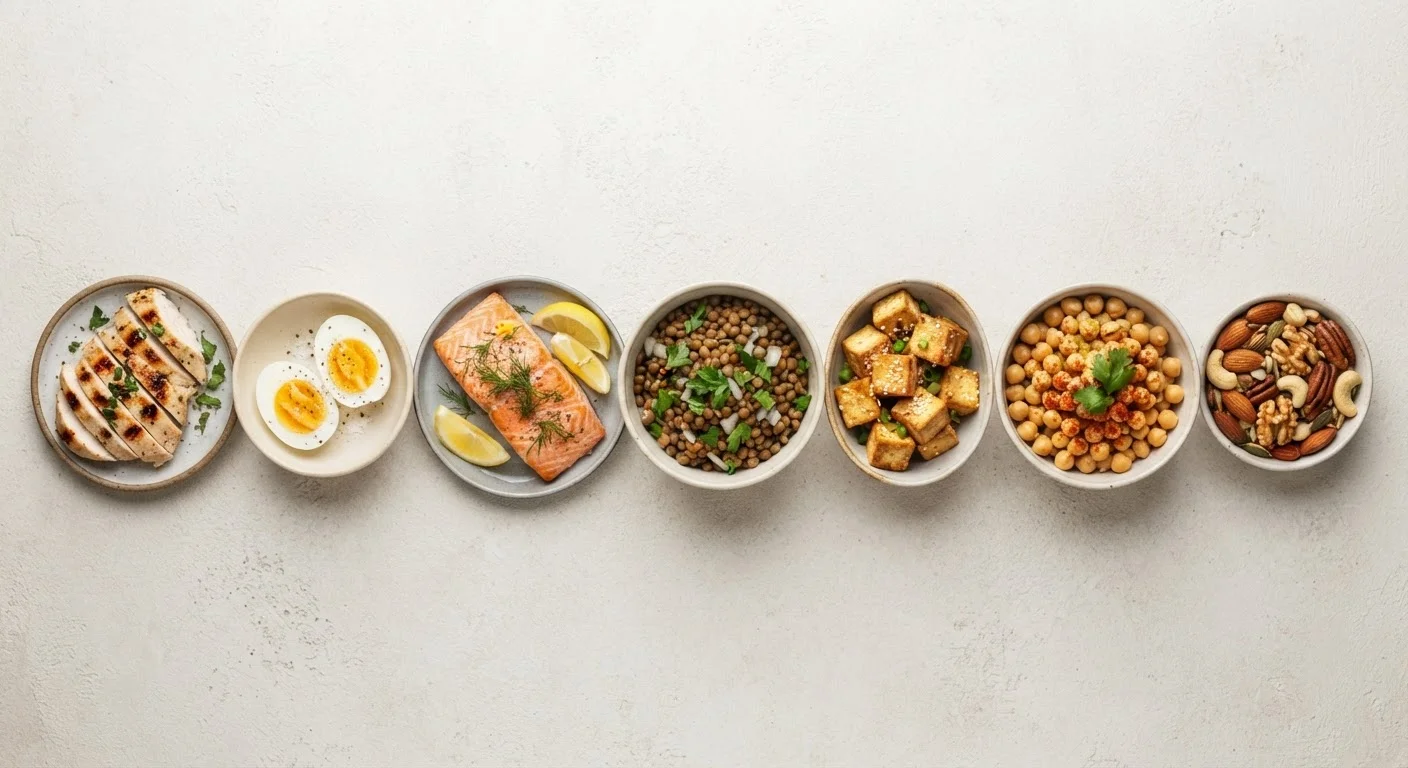
In practical terms, a blended approach might look like pairing eggs with black beans at breakfast, adding grilled fish to a lentil salad at lunch, or using a combination of dairy and hemp seeds in a smoothie. Budget-conscious eaters will find that plant proteins such as dried lentils and canned chickpeas are among the most affordable protein sources per gram available — a topic explored further in eating well on a budget.
Packaged protein products often blend sources too — reading ingredient lists carefully helps you understand exactly what you're getting. Our guide to reading an ingredient list can help decode those labels. And for context on how other food choices affect nutritional value, whole grains vs. refined grains offers a useful parallel comparison.
This article is for general informational and educational purposes only and is not a substitute for personalized medical or nutritional advice. Consult a qualified healthcare provider or registered dietitian for guidance specific to your health needs.